Passenger
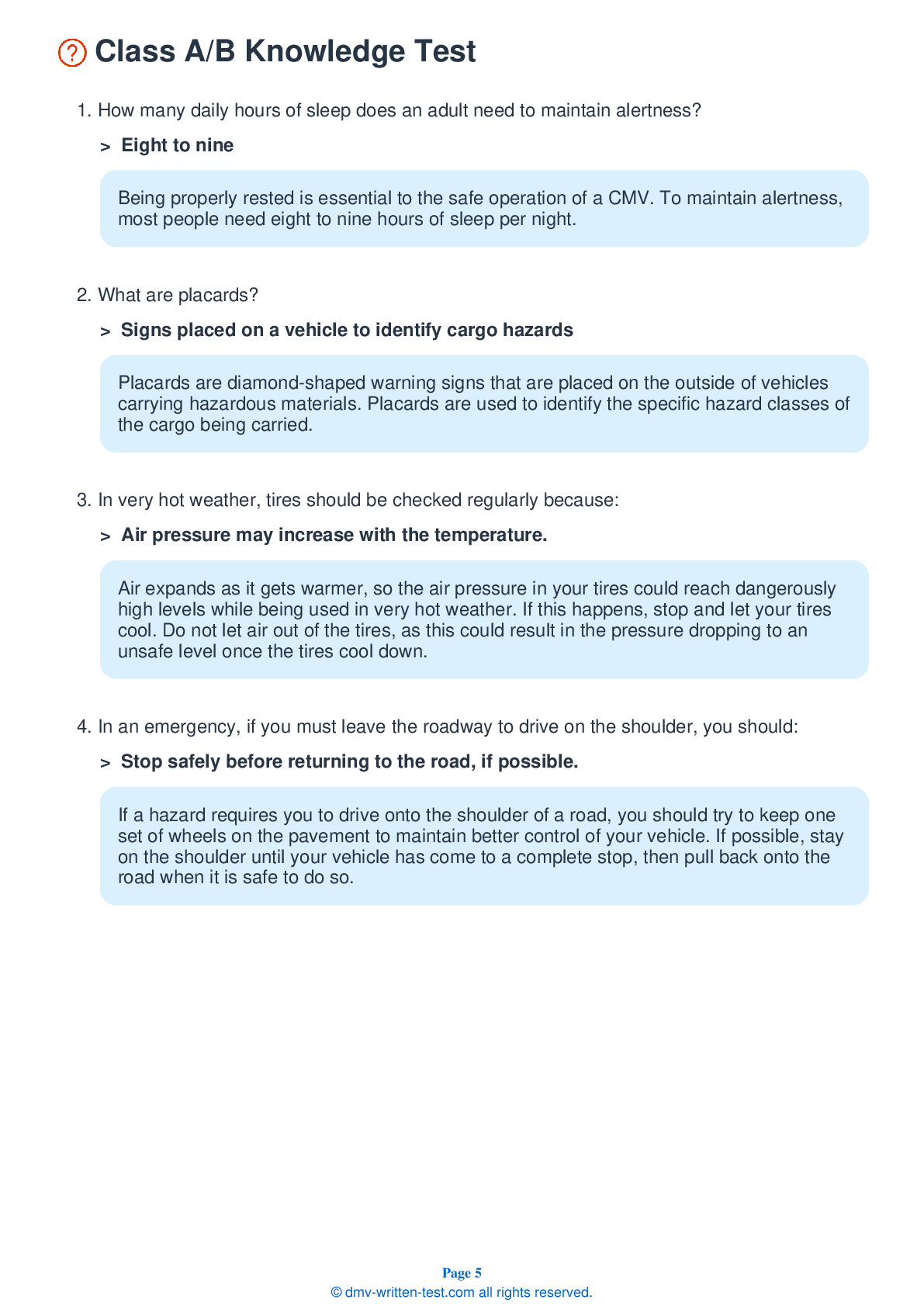
To receive this endorsement, applicants must pass a test consisting of 20 multiple choice questions. Each question has four answer choices. To pass, the applicant must answer at least 16 questions correctly. Test questions come from the New Hampshire CDL Driver’s Guide. Questions come from chapters covering: Driving Safely, Transporting Passengers Safely, Pre-Trip Vehicle Inspection Test, Basic Vehicle Control Skills Test and On-Road Driving. The Passenger endorsement can be used with the Class A, B or C CDL.
Number of Question
Passing Score
15. When inspecting your tires, you do not want to find:
Explanation
There should be at least 4/32 of an inch of tread depth in every major groove on front tires and 2/32 of an inch on other tires. Valve stems should not be cut or cracked. Tire sizes should not be mismatched.
16. Which of the following is not acceptable emergency equipment?
Explanation
During the vehicle inspection test, you will need to show emergency equipment, including spare electrical fuses; three red reflective triangles, six fuses, or three liquid burning flares; and a properly charged and rated fire extinguisher.
17. During the vehicle inspection test, you must be able to adequately check all of the following, except:
Explanation
During the pre-trip vehicle inspection test, you will be asked to check the power steering, water pump, alternator, and air compressor belts, if the vehicle is equipped.
18. If brakes overheat while going down a downhill grade, they may:
Explanation
Overuse of the brakes may cause them to overheat, making them less effective. This is known as "fade."
19. When approaching a railroad crossing, a bus driver should:
Explanation
A bus driver should stop between 15 and 50 feet before any railroad crossing and check for trains before proceeding across the tracks. The driver may open the door to improve their ability to see or hear any approaching trains.
20. At railroad crossings, bus drivers:
Explanation
When approaching a railroad crossing while driving a bus, you must stop between 15 and 50 feet from the nearest track to look and listen for any approaching trains. Only proceed once you are certain that there are no approaching trains. You do not need to stop at streetcar crossings; if a police officer or flagger is directing traffic; if there is a green traffic signal at the crossing; or at crossings marked "exempt" or "abandoned."
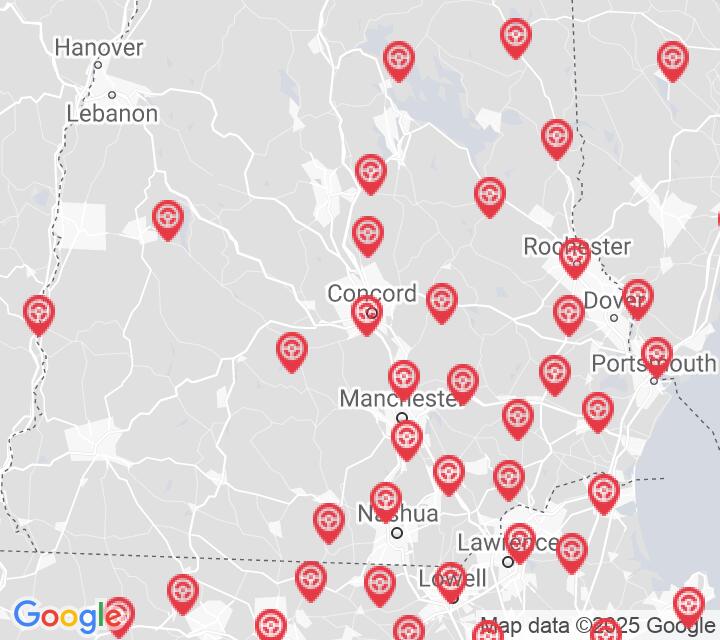
Search the best driving school in your neighbourhood

Frequently Asked Questions
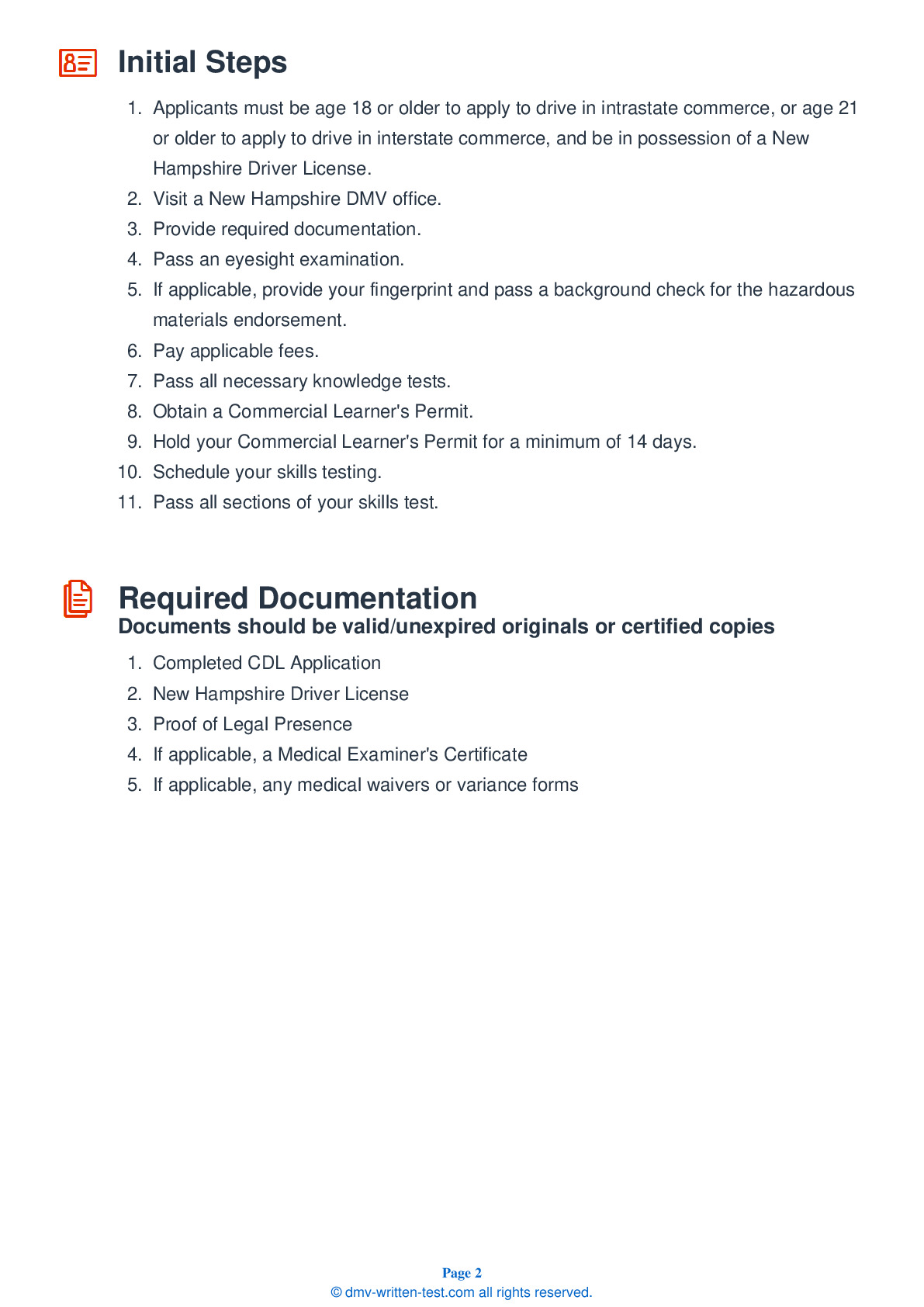
To obtain a CDL Passenger endorsement in New Hampshire, you will need to follow these steps:
1. Determine if you are eligible: You must hold a valid New Hampshire CDL and be at least 21 years old to obtain a CDL Passenger endorsement.
2. Study the CDL manual: You will need to study the New Hampshire CDL manual, paying close attention to the section on passenger transport.
3. Schedule and pass a knowledge test: You will need to schedule and pass a knowledge test at a New Hampshire DMV office. The test will cover topics such as loading and unloading passengers, handling emergencies, and driving techniques.
4. Complete a skills test: After passing the knowledge test, you will need to complete a skills test in a vehicle that is designed to transport passengers. The skills test will assess your ability to operate the vehicle safely, including backing up, turning, and maneuvering in tight spaces.
5. Pay the required fees: You will need to pay all required fees for the knowledge and skills tests, as well as for the new endorsement on your CDL.
6. Receive your new endorsement: If you pass both tests and pay all fees, you will receive your new CDL Passenger endorsement from the New Hampshire DMV.
1. Determine if you are eligible: You must hold a valid New Hampshire CDL and be at least 21 years old to obtain a CDL Passenger endorsement.
2. Study the CDL manual: You will need to study the New Hampshire CDL manual, paying close attention to the section on passenger transport.
3. Schedule and pass a knowledge test: You will need to schedule and pass a knowledge test at a New Hampshire DMV office. The test will cover topics such as loading and unloading passengers, handling emergencies, and driving techniques.
4. Complete a skills test: After passing the knowledge test, you will need to complete a skills test in a vehicle that is designed to transport passengers. The skills test will assess your ability to operate the vehicle safely, including backing up, turning, and maneuvering in tight spaces.
5. Pay the required fees: You will need to pay all required fees for the knowledge and skills tests, as well as for the new endorsement on your CDL.
6. Receive your new endorsement: If you pass both tests and pay all fees, you will receive your new CDL Passenger endorsement from the New Hampshire DMV.
To obtain a CDL Passenger license in New Hampshire, you must meet the following requirements:
1. Age: You must be at least 21 years old to apply for a CDL Passenger license.
2. Valid CDL: You must hold a valid New Hampshire CDL or be applying for a CDL at the same time.
3. Medical certification: You must pass a medical examination and have a current medical certification on file with the New Hampshire DMV.
4. Knowledge test: You must pass a knowledge test specific to passenger transport, which covers topics such as loading and unloading passengers, handling emergencies, and driving techniques.
5. Skills test: You must pass a skills test in a vehicle designed to transport passengers. The skills test will assess your ability to operate the vehicle safely, including backing up, turning, and maneuvering in tight spaces.
6. Background check: You may be required to undergo a background check as part of the application process.
7. Fees: You will need to pay all required fees for the knowledge and skills tests, as well as for the new endorsement on your CDL.
Meeting these requirements will allow you to obtain a CDL Passenger license in New Hampshire, which will authorize you to drive vehicles designed to transport passengers such as buses or vans.
1. Age: You must be at least 21 years old to apply for a CDL Passenger license.
2. Valid CDL: You must hold a valid New Hampshire CDL or be applying for a CDL at the same time.
3. Medical certification: You must pass a medical examination and have a current medical certification on file with the New Hampshire DMV.
4. Knowledge test: You must pass a knowledge test specific to passenger transport, which covers topics such as loading and unloading passengers, handling emergencies, and driving techniques.
5. Skills test: You must pass a skills test in a vehicle designed to transport passengers. The skills test will assess your ability to operate the vehicle safely, including backing up, turning, and maneuvering in tight spaces.
6. Background check: You may be required to undergo a background check as part of the application process.
7. Fees: You will need to pay all required fees for the knowledge and skills tests, as well as for the new endorsement on your CDL.
Meeting these requirements will allow you to obtain a CDL Passenger license in New Hampshire, which will authorize you to drive vehicles designed to transport passengers such as buses or vans.
Yes, there is an additional written test or exam for the CDL Passenger endorsement. In addition to the general knowledge test and any other applicable endorsement tests, you will need to pass a specific knowledge test for the Passenger endorsement. This knowledge test will assess your understanding of topics related to transporting passengers safely, such as loading and unloading passengers, handling emergencies, and driving techniques specific to passenger transport vehicles. You will need to study and prepare for this test in addition to any other tests required for your CDL.
Yes, there are specific skills and maneuvers that you will need to demonstrate during the CDL Passenger endorsement test.
The skills test for the Passenger endorsement will require you to operate a vehicle designed to transport passengers, such as a bus or van, and will assess your ability to drive the vehicle safely under various conditions. You will need to demonstrate your ability to perform specific maneuvers, such as:
1. Pre-trip inspection: You will need to complete a pre-trip inspection of the vehicle to ensure that it is safe for passenger transport.
2. Backing up: You will need to demonstrate your ability to back up the vehicle safely and accurately.
3. Turning: You will need to make both left and right turns while maintaining proper lane position and signaling appropriately.
4. Braking: You will need to demonstrate your ability to brake smoothly and bring the vehicle to a safe stop.
5. Emergencies: You will need to respond appropriately in emergency situations, such as sudden stops or other hazards on the road.
Overall, the skills test for the CDL Passenger endorsement will assess your ability to operate a passenger transport vehicle safely and responsibly, and you will need to practice and prepare for this test in order to pass it successfully.
The skills test for the Passenger endorsement will require you to operate a vehicle designed to transport passengers, such as a bus or van, and will assess your ability to drive the vehicle safely under various conditions. You will need to demonstrate your ability to perform specific maneuvers, such as:
1. Pre-trip inspection: You will need to complete a pre-trip inspection of the vehicle to ensure that it is safe for passenger transport.
2. Backing up: You will need to demonstrate your ability to back up the vehicle safely and accurately.
3. Turning: You will need to make both left and right turns while maintaining proper lane position and signaling appropriately.
4. Braking: You will need to demonstrate your ability to brake smoothly and bring the vehicle to a safe stop.
5. Emergencies: You will need to respond appropriately in emergency situations, such as sudden stops or other hazards on the road.
Overall, the skills test for the CDL Passenger endorsement will assess your ability to operate a passenger transport vehicle safely and responsibly, and you will need to practice and prepare for this test in order to pass it successfully.
No, you cannot transport passengers without a CDL Passenger endorsement if you are operating a commercial vehicle designed to transport more than 15 passengers, including the driver. If you are caught operating a commercial vehicle without the proper endorsement, you can be fined and potentially lose your CDL.
It's important to note that the rules and regulations for obtaining a CDL Passenger endorsement can vary depending on the state you're in, so it's important to check with your state's Department of Motor Vehicles or commercial driver licensing agency for specific requirements. However, in general, if you are driving a commercial vehicle designed to transport passengers, you will need to have the appropriate endorsement on your CDL in order to do so legally.
It's important to note that the rules and regulations for obtaining a CDL Passenger endorsement can vary depending on the state you're in, so it's important to check with your state's Department of Motor Vehicles or commercial driver licensing agency for specific requirements. However, in general, if you are driving a commercial vehicle designed to transport passengers, you will need to have the appropriate endorsement on your CDL in order to do so legally.
You can add the CDL Passenger endorsement to your existing CDL license. You will need to pass the CDL Passenger endorsement test and pay the appropriate fees in order to add the endorsement to your license.
The process for adding a CDL Passenger endorsement may vary slightly depending on the state you're in, but in general, you will need to:
1. Study for the CDL Passenger endorsement test: You can find study materials and practice tests online or through your state's Department of Motor Vehicles or commercial driver licensing agency.
2. Schedule and take the CDL Passenger endorsement test: You will need to visit a testing center and take the skills test for the Passenger endorsement. If you pass, you will receive a new CDL with the endorsement added.
3. Pay any required fees: You will likely need to pay an application fee, testing fee, and/or endorsement fee in order to add the CDL Passenger endorsement to your license.
It's important to note that some states may have additional requirements for obtaining a CDL Passenger endorsement, such as age restrictions or medical certification, so be sure to check with your state's Department of Motor Vehicles or commercial driver licensing agency for specific requirements.
The process for adding a CDL Passenger endorsement may vary slightly depending on the state you're in, but in general, you will need to:
1. Study for the CDL Passenger endorsement test: You can find study materials and practice tests online or through your state's Department of Motor Vehicles or commercial driver licensing agency.
2. Schedule and take the CDL Passenger endorsement test: You will need to visit a testing center and take the skills test for the Passenger endorsement. If you pass, you will receive a new CDL with the endorsement added.
3. Pay any required fees: You will likely need to pay an application fee, testing fee, and/or endorsement fee in order to add the CDL Passenger endorsement to your license.
It's important to note that some states may have additional requirements for obtaining a CDL Passenger endorsement, such as age restrictions or medical certification, so be sure to check with your state's Department of Motor Vehicles or commercial driver licensing agency for specific requirements.
Yes, there are some restrictions and limitations for drivers with a CDL Passenger endorsement. These restrictions and limitations are in place to help ensure the safety of passengers and other drivers on the road. Here are some common restrictions and limitations:
1. Vehicle size and weight: Drivers with a CDL Passenger endorsement may be limited to operating vehicles under a certain size or weight, depending on the state they're in.
2. Number of passengers: Drivers with a CDL Passenger endorsement may be limited to transporting a certain number of passengers, depending on the state they're in.
3. Time of day: Some states may restrict drivers with a CDL Passenger endorsement from driving during certain hours, such as late at night or early in the morning.
4. Age: Some states may have age restrictions for drivers with a CDL Passenger endorsement, requiring them to be a certain age or have a certain amount of driving experience before they can transport passengers.
5. Medical certification: Drivers with a CDL Passenger endorsement may be required to undergo regular medical certification to ensure that they are physically fit to drive passengers.
It's important for drivers with a CDL Passenger endorsement to be aware of these restrictions and limitations, as violating them can result in fines, license suspension or revocation, and other penalties.
1. Vehicle size and weight: Drivers with a CDL Passenger endorsement may be limited to operating vehicles under a certain size or weight, depending on the state they're in.
2. Number of passengers: Drivers with a CDL Passenger endorsement may be limited to transporting a certain number of passengers, depending on the state they're in.
3. Time of day: Some states may restrict drivers with a CDL Passenger endorsement from driving during certain hours, such as late at night or early in the morning.
4. Age: Some states may have age restrictions for drivers with a CDL Passenger endorsement, requiring them to be a certain age or have a certain amount of driving experience before they can transport passengers.
5. Medical certification: Drivers with a CDL Passenger endorsement may be required to undergo regular medical certification to ensure that they are physically fit to drive passengers.
It's important for drivers with a CDL Passenger endorsement to be aware of these restrictions and limitations, as violating them can result in fines, license suspension or revocation, and other penalties.
Yes, there are age requirements and restrictions for obtaining a CDL Passenger endorsement. These requirements and restrictions vary by state, but in general, you must be at least 18 years old to obtain a CDL Passenger endorsement. However, some states may require you to be 21 years old.
In addition to age requirements, there may be other restrictions for obtaining a CDL Passenger endorsement. For example, you may need to have a certain amount of driving experience or meet certain medical requirements.
It's important to check with your state's Department of Motor Vehicles or commercial driver licensing agency for specific age requirements and restrictions for obtaining a CDL Passenger endorsement. They will also have information on any other requirements or restrictions that may apply in your state.
In addition to age requirements, there may be other restrictions for obtaining a CDL Passenger endorsement. For example, you may need to have a certain amount of driving experience or meet certain medical requirements.
It's important to check with your state's Department of Motor Vehicles or commercial driver licensing agency for specific age requirements and restrictions for obtaining a CDL Passenger endorsement. They will also have information on any other requirements or restrictions that may apply in your state.
With a CDL Passenger endorsement, you can operate a commercial motor vehicle (CMV) designed to transport 16 or more passengers, including the driver. This includes vehicles such as:
1. Buses: This includes school buses, city buses, and interstate buses.
2. Vans: This includes passenger vans designed to transport more than 15 passengers.
3. Limousines: This includes large limousines that can transport more than 15 passengers.
4. Other passenger transport vehicles: This includes other types of passenger transport vehicles designed to carry more than 15 passengers, such as shuttle buses or tourist buses.
It's important to note that there may be additional requirements or restrictions for operating these types of vehicles with a CDL Passenger endorsement, such as age requirements or medical certifications. Be sure to check with your state's Department of Motor Vehicles or commercial driver licensing agency for specific requirements and restrictions that may apply in your state.
1. Buses: This includes school buses, city buses, and interstate buses.
2. Vans: This includes passenger vans designed to transport more than 15 passengers.
3. Limousines: This includes large limousines that can transport more than 15 passengers.
4. Other passenger transport vehicles: This includes other types of passenger transport vehicles designed to carry more than 15 passengers, such as shuttle buses or tourist buses.
It's important to note that there may be additional requirements or restrictions for operating these types of vehicles with a CDL Passenger endorsement, such as age requirements or medical certifications. Be sure to check with your state's Department of Motor Vehicles or commercial driver licensing agency for specific requirements and restrictions that may apply in your state.