Tank
This endorsement is required to haul any liquid or gaseous materials in a tank or tanks having a capacity of 1,000 gallons or more that is either permanently or temporarily attached to the vehicle or chassis. To receive this endorsement, applicants must pass a test. The test consists of 20 multiple choice questions. Each question has two, three or four possible answer choices. To pass, the applicant must answer at least 16 questions correctly. Test questions come from the Utah Commercial Driver License Handbook. Questions come from chapters covering: Driving Safely, Tank Vehicles, Hazardous Materials and Combination Vehicles. The Tank endorsement can be used with the Class A, B or C CDL.
Number of Question
Passing Score
15. To prevent a trailer from rolling over, you should:
Explanation
To reduce the risk of a rollover when driving a combination vehicle, you should keep the weight of the cargo as low to the ground as possible and drive slowly around turns.
16. When approaching a vehicle for a pre-trip inspection, a driver should look under the vehicle:
Explanation
When approaching your vehicle before an inspection, make note of its general condition and ensure that it is not damaged or leaning. Look under the vehicle for fresh leaks of oil, grease, or fuel. Check around the vehicle for hazards to movement, such as people, other vehicles, or low-hanging wires or tree limbs.
17. When driving a tank vehicle with liquid cargo, the driver should:
Explanation
When driving with a tank of liquid, you should increase your following distance in order to reduce the need for sudden stops, thereby reducing the chance of liquid surge.
18. If you doubt that you have enough space to safely drive under a bridge or sign, you should:
Explanation
If you are not certain that your vehicle will fit under overhead objects, you should slow down and take a different route, if possible.
19. Eating while driving:
Explanation
Eating while driving can be a dangerous distraction to the driver both because it diverts their attention away from the task at hand and requires them to remove a hand from the steering wheel.
20. What is sleep debt?
Explanation
You can build up a "debt" of sleep if you do not sleep for adequate amounts of time. You can only catch up on the time that you "owe" by getting more sleep.
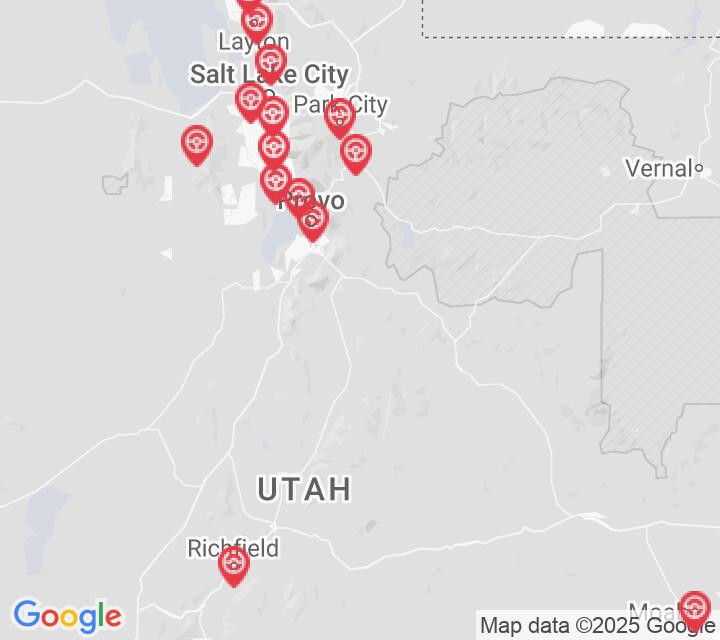
Search the best driving school in your neighbourhood

Frequently Asked Questions
To obtain a CDL tank endorsement in Utah, follow these steps:
1. Obtain a Utah Commercial Driver's License (CDL) by passing the CDL knowledge and skills tests.
2. Complete the Commercial Driver License Application and indicate that you want to obtain the Tank endorsement.
3. Obtain a Utah Commercial Learner's Permit (CLP) if you do not already have a CDL.
4. Study the Tanker Endorsement section of the Utah CDL Handbook to prepare for the Tanker endorsement knowledge test.
5. Schedule an appointment at a Utah Division of Motor Vehicles (DMV) office to take the Tanker endorsement knowledge test.
6. Pass the Tanker endorsement knowledge test.
7. Complete any additional requirements for obtaining a Tanker endorsement, such as a background check or additional endorsements.
8. Pay any necessary fees to obtain your Tanker endorsement.
It's important to note that you must already have a CDL before you can obtain any endorsements, including the Tanker endorsement. Additionally, you must have a Hazardous Materials (H) endorsement before you can obtain a Tanker endorsement if you plan to transport hazardous materials in your tanker vehicle.
1. Obtain a Utah Commercial Driver's License (CDL) by passing the CDL knowledge and skills tests.
2. Complete the Commercial Driver License Application and indicate that you want to obtain the Tank endorsement.
3. Obtain a Utah Commercial Learner's Permit (CLP) if you do not already have a CDL.
4. Study the Tanker Endorsement section of the Utah CDL Handbook to prepare for the Tanker endorsement knowledge test.
5. Schedule an appointment at a Utah Division of Motor Vehicles (DMV) office to take the Tanker endorsement knowledge test.
6. Pass the Tanker endorsement knowledge test.
7. Complete any additional requirements for obtaining a Tanker endorsement, such as a background check or additional endorsements.
8. Pay any necessary fees to obtain your Tanker endorsement.
It's important to note that you must already have a CDL before you can obtain any endorsements, including the Tanker endorsement. Additionally, you must have a Hazardous Materials (H) endorsement before you can obtain a Tanker endorsement if you plan to transport hazardous materials in your tanker vehicle.
The requirements to get a CDL tank endorsement in Utah are:
1. You must already hold a valid Utah Commercial Driver's License (CDL).
2. You must be at least 18 years of age to transport non-hazardous materials or 21 years of age to transport hazardous materials.
3. You must pass the Tanker Vehicles Endorsement knowledge test.
4. You must meet the federal and state requirements for transporting hazardous materials, if applicable.
5. You may be required to complete additional training or pass additional tests, depending on the type of tanker vehicle you will be driving.
It's important to note that you must already have a CDL before you can obtain any endorsements, including the Tanker endorsement. Additionally, you must have a Hazardous Materials (H) endorsement before you can obtain a Tanker endorsement if you plan to transport hazardous materials in your tanker vehicle.
1. You must already hold a valid Utah Commercial Driver's License (CDL).
2. You must be at least 18 years of age to transport non-hazardous materials or 21 years of age to transport hazardous materials.
3. You must pass the Tanker Vehicles Endorsement knowledge test.
4. You must meet the federal and state requirements for transporting hazardous materials, if applicable.
5. You may be required to complete additional training or pass additional tests, depending on the type of tanker vehicle you will be driving.
It's important to note that you must already have a CDL before you can obtain any endorsements, including the Tanker endorsement. Additionally, you must have a Hazardous Materials (H) endorsement before you can obtain a Tanker endorsement if you plan to transport hazardous materials in your tanker vehicle.
Utah does not require any specific training or experience to obtain a CDL Tank endorsement. However, it's recommended that you receive specialized training in the operation of tanker vehicles before taking the Tanker Vehicles Endorsement knowledge test. This training can help you become familiar with the unique handling characteristics of tanker vehicles and teach you how to prevent rollovers, spills, and other hazards associated with transporting liquids, gases, or other materials in bulk.
Additionally, if you plan to transport hazardous materials in your tanker vehicle, federal law requires that you complete Hazardous Materials (HazMat) training and obtain a HazMat endorsement in addition to your Tanker endorsement. The HazMat training covers topics such as identifying hazardous materials, handling emergencies, and complying with federal regulations.
Additionally, if you plan to transport hazardous materials in your tanker vehicle, federal law requires that you complete Hazardous Materials (HazMat) training and obtain a HazMat endorsement in addition to your Tanker endorsement. The HazMat training covers topics such as identifying hazardous materials, handling emergencies, and complying with federal regulations.
Yes, there is an additional written test that you must pass to obtain a CDL Tank endorsement in Utah. The Tanker Vehicles Endorsement knowledge test is designed to assess your knowledge of the safe operation of tanker vehicles, including topics such as:
1. Inspecting tanker vehicles for safety and compliance
2. Loading and unloading procedures for tanker vehicles
3. Controlling the surge of liquids in a tanker vehicle
4. Responding to emergencies and preventing spills or leaks
You must pass this written test with a score of at least 80% to obtain a Tanker endorsement.
If you plan to transport hazardous materials in your tanker vehicle, you must also pass a Hazardous Materials (HazMat) knowledge test in addition to the Tanker Vehicles Endorsement knowledge test. The HazMat knowledge test covers topics such as identifying hazardous materials, handling emergencies, and complying with federal regulations. You must also pass a Transportation Security Administration (TSA) background check before you can obtain a HazMat endorsement.
1. Inspecting tanker vehicles for safety and compliance
2. Loading and unloading procedures for tanker vehicles
3. Controlling the surge of liquids in a tanker vehicle
4. Responding to emergencies and preventing spills or leaks
You must pass this written test with a score of at least 80% to obtain a Tanker endorsement.
If you plan to transport hazardous materials in your tanker vehicle, you must also pass a Hazardous Materials (HazMat) knowledge test in addition to the Tanker Vehicles Endorsement knowledge test. The HazMat knowledge test covers topics such as identifying hazardous materials, handling emergencies, and complying with federal regulations. You must also pass a Transportation Security Administration (TSA) background check before you can obtain a HazMat endorsement.
The Tanker Vehicles Endorsement written test covers topics related to the safe operation of tanker vehicles. Some of the specific topics that may be covered on the test include:
1. Inspecting tanker vehicles for safety and compliance
2. Identifying and controlling the surge of liquids in a tanker vehicle
3. Loading and unloading procedures for tanker vehicles
4. Preventing spills, leaks, and other hazards associated with transporting liquids, gases, or other materials in bulk
5. Responding to emergencies, such as leaks or rollovers
6. Understanding the characteristics of various types of liquids and gases that may be transported in a tanker vehicle
7. Understanding the relationship between a vehicle's center of gravity and its stability when carrying a load
It's important to study all of these topics thoroughly before taking the Tanker Vehicles Endorsement knowledge test to ensure that you have a comprehensive understanding of the safe operation of tanker vehicles.
1. Inspecting tanker vehicles for safety and compliance
2. Identifying and controlling the surge of liquids in a tanker vehicle
3. Loading and unloading procedures for tanker vehicles
4. Preventing spills, leaks, and other hazards associated with transporting liquids, gases, or other materials in bulk
5. Responding to emergencies, such as leaks or rollovers
6. Understanding the characteristics of various types of liquids and gases that may be transported in a tanker vehicle
7. Understanding the relationship between a vehicle's center of gravity and its stability when carrying a load
It's important to study all of these topics thoroughly before taking the Tanker Vehicles Endorsement knowledge test to ensure that you have a comprehensive understanding of the safe operation of tanker vehicles.
In Utah, there is no skills test required to obtain the Tanker endorsement for your CDL. However, it is important to note that the Tanker endorsement does require specialized knowledge and skills to operate a tanker vehicle safely and efficiently.
During your training, you should practice performing maneuvers that are specific to tanker vehicles, such as:
1. Backing up a tanker vehicle: Since tanker vehicles are longer and heavier than other commercial vehicles, backing up can be more challenging. You should practice backing up in a straight line and making turns in a confined space.
2. Controlling the surge of liquids: Tanker vehicles are designed to transport liquids, which can create a surge effect that can make the vehicle unstable. You should practice controlling the surge by braking gradually and avoiding sudden steering movements.
3. Loading and unloading procedures: Tanker vehicles are loaded and unloaded differently than other commercial vehicles. You should practice using the proper equipment and following established procedures for loading and unloading different types of liquids.
These skills will not be tested during the Tanker Vehicles Endorsement knowledge test; however, they are important for you to be familiar with as you prepare to operate a tanker vehicle safely on Utah roads.
During your training, you should practice performing maneuvers that are specific to tanker vehicles, such as:
1. Backing up a tanker vehicle: Since tanker vehicles are longer and heavier than other commercial vehicles, backing up can be more challenging. You should practice backing up in a straight line and making turns in a confined space.
2. Controlling the surge of liquids: Tanker vehicles are designed to transport liquids, which can create a surge effect that can make the vehicle unstable. You should practice controlling the surge by braking gradually and avoiding sudden steering movements.
3. Loading and unloading procedures: Tanker vehicles are loaded and unloaded differently than other commercial vehicles. You should practice using the proper equipment and following established procedures for loading and unloading different types of liquids.
These skills will not be tested during the Tanker Vehicles Endorsement knowledge test; however, they are important for you to be familiar with as you prepare to operate a tanker vehicle safely on Utah roads.
Yes, there are restrictions and limitations for drivers with a CDL Tank endorsement. These restrictions and limitations are in place to ensure that drivers operating tanker vehicles have the specialized knowledge and skills necessary to operate these vehicles safely. Some of the restrictions and limitations for drivers with a Tank endorsement include:
1. You must have a valid CDL with a Tank endorsement to operate a tanker vehicle.
2. You are not authorized to operate a tanker vehicle that is used for the transportation of hazardous materials (HazMat) unless you also have a HazMat endorsement on your CDL.
3. You must be at least 21 years old to operate a tanker vehicle across state lines.
4. Tanker vehicles have special equipment requirements, such as spill prevention and surge control devices, which must be properly maintained and used at all times.
5. Tanker vehicles have weight restrictions that must be followed, depending on the type of vehicle and the cargo being transported.
It's important to be aware of these restrictions and limitations if you have a CDL Tank endorsement, as failure to comply with them can result in penalties, fines, or even the loss of your CDL.
1. You must have a valid CDL with a Tank endorsement to operate a tanker vehicle.
2. You are not authorized to operate a tanker vehicle that is used for the transportation of hazardous materials (HazMat) unless you also have a HazMat endorsement on your CDL.
3. You must be at least 21 years old to operate a tanker vehicle across state lines.
4. Tanker vehicles have special equipment requirements, such as spill prevention and surge control devices, which must be properly maintained and used at all times.
5. Tanker vehicles have weight restrictions that must be followed, depending on the type of vehicle and the cargo being transported.
It's important to be aware of these restrictions and limitations if you have a CDL Tank endorsement, as failure to comply with them can result in penalties, fines, or even the loss of your CDL.
No, you cannot transport liquid or gas materials without a CDL Tank endorsement if the vehicle you are driving requires a Tank endorsement. In Utah, any driver operating a commercial motor vehicle (CMV) that is designed to transport 1,000 gallons or more of liquid or gas materials in a tank vehicle must have a Tank endorsement on their CDL.
If you are caught operating a tanker vehicle without the required CDL Tank endorsement, you may face penalties such as fines, license suspension or revocation, and even criminal charges in some cases. Additionally, you may be held liable for any damages or injuries that result from an accident you cause while operating an unendorsed tanker vehicle.
It is important to make sure that you have the appropriate endorsements on your CDL before operating any commercial motor vehicle to ensure compliance with state and federal regulations and to keep yourself and other road users safe.
If you are caught operating a tanker vehicle without the required CDL Tank endorsement, you may face penalties such as fines, license suspension or revocation, and even criminal charges in some cases. Additionally, you may be held liable for any damages or injuries that result from an accident you cause while operating an unendorsed tanker vehicle.
It is important to make sure that you have the appropriate endorsements on your CDL before operating any commercial motor vehicle to ensure compliance with state and federal regulations and to keep yourself and other road users safe.
To add a CDL Tank endorsement to your existing CDL license, you will need to apply for and pass the Tank endorsement knowledge test and, in some cases, pass a skills test in a tanker vehicle. This can usually be done at your local Department of Motor Vehicles (DMV) office or other authorized testing facility.
You will need to provide proof of your identity, residency, and citizenship or legal presence in the United States, as well as your current CDL license and any applicable fees. It's a good idea to check with your state's DMV or licensing agency for specific requirements and fees.
Once you have passed the Tank endorsement knowledge test and any necessary skills tests, the Tank endorsement will be added to your existing CDL license. You will receive a new license with the Tank endorsement included. It's important to keep this new license on hand when operating a tanker vehicle to ensure compliance with state and federal regulations.
You will need to provide proof of your identity, residency, and citizenship or legal presence in the United States, as well as your current CDL license and any applicable fees. It's a good idea to check with your state's DMV or licensing agency for specific requirements and fees.
Once you have passed the Tank endorsement knowledge test and any necessary skills tests, the Tank endorsement will be added to your existing CDL license. You will receive a new license with the Tank endorsement included. It's important to keep this new license on hand when operating a tanker vehicle to ensure compliance with state and federal regulations.
Yes, there are specific requirements and regulations for handling hazardous materials with a CDL Tank endorsement. In addition to the Tank endorsement on your CDL, you may also need a Hazardous Materials (HazMat) endorsement to transport materials that are classified as hazardous.
To obtain a HazMat endorsement, you must pass a separate knowledge test and undergo a background check. You will also need to complete training in hazardous materials handling and pass a security threat assessment by the Transportation Security Administration (TSA).
In addition to having the required endorsements, drivers with a CDL Tank endorsement who transport hazardous materials must comply with specific regulations regarding loading, unloading, placarding, and emergency response. These regulations are outlined in the Hazardous Materials Regulations (HMR) set forth by the Federal Motor Carrier Safety Administration (FMCSA).
Drivers must also carry specific documentation, including shipping papers, emergency response information, and placards or labels indicating the nature of the hazardous materials being transported. Failure to comply with these regulations can result in fines, penalties, and even criminal charges in some cases.
It's important for drivers with a CDL Tank endorsement who transport hazardous materials to stay up-to-date on the latest regulations and requirements to ensure compliance and safety on the road.
To obtain a HazMat endorsement, you must pass a separate knowledge test and undergo a background check. You will also need to complete training in hazardous materials handling and pass a security threat assessment by the Transportation Security Administration (TSA).
In addition to having the required endorsements, drivers with a CDL Tank endorsement who transport hazardous materials must comply with specific regulations regarding loading, unloading, placarding, and emergency response. These regulations are outlined in the Hazardous Materials Regulations (HMR) set forth by the Federal Motor Carrier Safety Administration (FMCSA).
Drivers must also carry specific documentation, including shipping papers, emergency response information, and placards or labels indicating the nature of the hazardous materials being transported. Failure to comply with these regulations can result in fines, penalties, and even criminal charges in some cases.
It's important for drivers with a CDL Tank endorsement who transport hazardous materials to stay up-to-date on the latest regulations and requirements to ensure compliance and safety on the road.


