Knowledge Test Class A
This license is required for driving any legal combination of vehicles, with a gross combination weight rating of 26,001 pounds or more, provided the GVWR of a trailer exceeds 10,000 pounds To receive this license, applicants must pass a 50-question test. To pass, applicants must answer 40 questions correctly. Each question has two, three or four possible answer choices. Test questions come from the Utah Commercial Driver License Handbook. Questions come from chapters covering: Introduction, Driving Safely, Transporting Cargo Safely, Air Brakes (if applicable), Combination, Doubles and Hazardous Materials. Endorsements that may be used with a Class A CDL are: Hazardous materials, Tank, Passenger, HazMat and Tank, Air Brakes and School bus.
Number of Question
Passing Score
15. One way to prevent hydroplaning on wet road surfaces is to:
Explanation
When driving on a wet road surface, the risk of hydroplaning is increased if your tire pressure is too low or your tire tread is too worn. If you begin to hydroplane, release the accelerator and push in the clutch to slow down.
16. When pulled off on the side of the road, a driver should:
Explanation
If you must stop on the side of the road, it is important that you turn on your emergency flashers as a warning to other drivers. This is especially important if you are stopped at night.
17. When driving a 50-foot truck at 50 mph, you should maintain a following distance of at least:
Explanation
When traveling at speeds below 40 mph, you should maintain at least one second of following distance for every 10 feet of your vehicle's length. At higher speeds, add an additional second.
18. Exhaust system parts should be:
Explanation
When inspecting an exhaust system, you should verify that parts of the system are not loose, broken, or missing. The system's parts must be properly mounted and should not be rubbing against moving parts of the vehicle.
19. Manual air tank drains should be:
Explanation
Compressed air in an air brake system usually contains a certain amount of water and compressor oil. The water and oil can damage the brakes if left to accumulate in the system. Manually operated air tank drains must be opened daily to remove this build-up.
20. Bridges usually:
Explanation
Bridges usually freeze before the rest of the road. You should be especially careful when crossing bridges if the temperature is near the freezing point.
21. If a vehicle has a vehicle inspection report, the driver:
Explanation
For the first step of a vehicle inspection, you should review the last inspection report on your vehicle, if there is one. The carrier should have repaired any problems noted on the report.
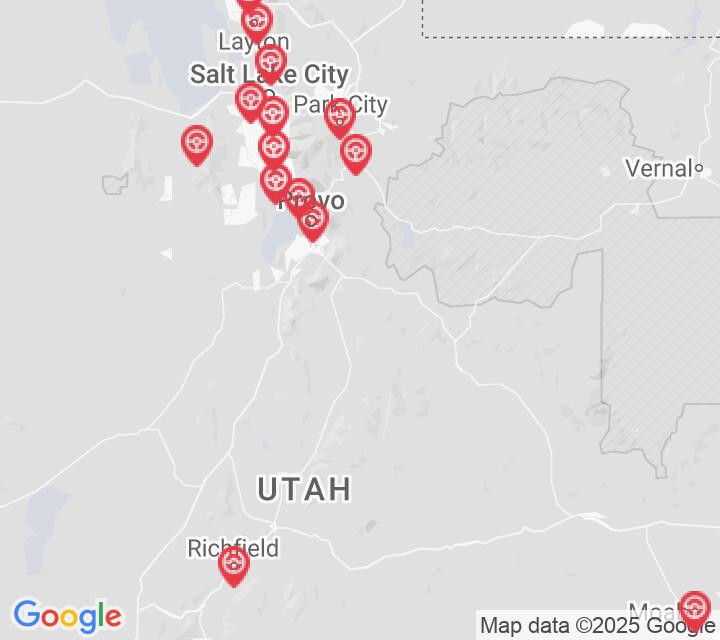
Search the best driving school in your neighbourhood

Frequently Asked Questions
A Class A CDL (Commercial Driver's License) is a type of license required to operate a combination of vehicles with a total weight of 26,001 pounds or more, including towed vehicles that weigh more than 10,000 pounds. In Utah, a Class A CDL allows the holder to operate vehicles such as tractor-trailers, tanker trucks, and flatbeds.
With a Class A CDL license in Utah, you can operate a combination of vehicles with a total weight of 26,001 pounds or more, including a towed vehicle that weighs more than 10,000 pounds. This can include vehicles such as tractor-trailers, tanker trucks, flatbeds, and other large commercial vehicles. It is important to note that there may be additional requirements or endorsements needed to operate specific types of vehicles, such as hazardous materials or passenger endorsements.
To obtain a Class A CDL license in Utah, you must meet several requirements:
1. Age: You must be at least 18 years old to obtain a Class A CDL license. However, if you plan to operate a vehicle across state lines or transport hazardous materials, you must be at least 21 years old.
2. Driver's License: You must already have a valid Utah driver's license.
3. Medical Certification: You must pass a Department of Transportation (DOT) physical examination and obtain a medical certification.
4. Knowledge Tests: You must pass knowledge tests covering general commercial driving and specific knowledge for the type of vehicle you plan to operate.
5. Skills Test: You must pass a skills test that includes a pre-trip inspection, basic vehicle control, and on-road driving.
6. Background Check: You must pass a background check that includes your driving record and criminal history.
7. Fees: You must pay the appropriate fees for your CDL license and any endorsements or additional certifications needed.
It is also important to note that additional requirements may apply for specific types of vehicles or endorsements, such as hazardous materials or passenger endorsements.
1. Age: You must be at least 18 years old to obtain a Class A CDL license. However, if you plan to operate a vehicle across state lines or transport hazardous materials, you must be at least 21 years old.
2. Driver's License: You must already have a valid Utah driver's license.
3. Medical Certification: You must pass a Department of Transportation (DOT) physical examination and obtain a medical certification.
4. Knowledge Tests: You must pass knowledge tests covering general commercial driving and specific knowledge for the type of vehicle you plan to operate.
5. Skills Test: You must pass a skills test that includes a pre-trip inspection, basic vehicle control, and on-road driving.
6. Background Check: You must pass a background check that includes your driving record and criminal history.
7. Fees: You must pay the appropriate fees for your CDL license and any endorsements or additional certifications needed.
It is also important to note that additional requirements may apply for specific types of vehicles or endorsements, such as hazardous materials or passenger endorsements.
The minimum age requirement for a Class A CDL license in Utah is 18 years old. However, if you plan to operate a commercial vehicle across state lines or transport hazardous materials, you must be at least 21 years old.
Yes, depending on the type of vehicle you plan to operate and the cargo you plan to transport, you may need additional endorsements for your Class A CDL license. The following are some of the endorsements that may be required:
1. T - Double/Triple Trailers: This endorsement is required to operate a combination of two or three trailers.
2. P - Passenger: This endorsement is required to operate a vehicle designed to transport 16 or more passengers, including the driver.
3. H - Hazardous Materials: This endorsement is required to transport hazardous materials as defined by federal law.
4. N - Tank Vehicles: This endorsement is required to operate a vehicle designed to transport liquid or gaseous materials in a tank or tanks with a capacity of 1,000 gallons or more.
5. X - Combination of Tank Vehicle and Hazardous Materials: This endorsement is required to transport hazardous materials in a tank vehicle.
It is important to note that each endorsement requires passing additional knowledge tests and, in some cases, skills tests.
1. T - Double/Triple Trailers: This endorsement is required to operate a combination of two or three trailers.
2. P - Passenger: This endorsement is required to operate a vehicle designed to transport 16 or more passengers, including the driver.
3. H - Hazardous Materials: This endorsement is required to transport hazardous materials as defined by federal law.
4. N - Tank Vehicles: This endorsement is required to operate a vehicle designed to transport liquid or gaseous materials in a tank or tanks with a capacity of 1,000 gallons or more.
5. X - Combination of Tank Vehicle and Hazardous Materials: This endorsement is required to transport hazardous materials in a tank vehicle.
It is important to note that each endorsement requires passing additional knowledge tests and, in some cases, skills tests.
The Class A CDL skills test is divided into three parts: the pre-trip inspection, basic vehicle control, and on-road driving. Here is a brief overview of each part:
1. Pre-trip Inspection: In this part of the test, you will be required to demonstrate your knowledge of the vehicle and its safety equipment. You will be asked to do a thorough inspection of the vehicle and identify any defects or safety hazards.
2. Basic Vehicle Control: In this part of the test, you will demonstrate your ability to control the vehicle in a variety of situations such as straight backing, offset backing, parallel parking, and alley docking.
3. On-road Driving: In this part of the test, you will demonstrate your ability to safely operate the vehicle on public roads. You will be evaluated on your ability to obey traffic laws, use proper shifting techniques, change lanes safely, and navigate turns and intersections.
Each state may have its own specific requirements and scoring criteria for the skills test. It is important to consult your state's CDL manual for detailed information on what is required in your state.
1. Pre-trip Inspection: In this part of the test, you will be required to demonstrate your knowledge of the vehicle and its safety equipment. You will be asked to do a thorough inspection of the vehicle and identify any defects or safety hazards.
2. Basic Vehicle Control: In this part of the test, you will demonstrate your ability to control the vehicle in a variety of situations such as straight backing, offset backing, parallel parking, and alley docking.
3. On-road Driving: In this part of the test, you will demonstrate your ability to safely operate the vehicle on public roads. You will be evaluated on your ability to obey traffic laws, use proper shifting techniques, change lanes safely, and navigate turns and intersections.
Each state may have its own specific requirements and scoring criteria for the skills test. It is important to consult your state's CDL manual for detailed information on what is required in your state.
Yes, there are certain restrictions and limitations for drivers with a Class A CDL license. Here are some of the common restrictions:
1. E - Automatic Transmission: This restriction is imposed if the driver has not passed the skills test in a vehicle with a manual transmission. The restriction limits the driver to operating vehicles with an automatic transmission.
2. L - Air Brakes: This restriction is imposed if the driver has not passed the air brake knowledge test or skills test. The restriction limits the driver to operating vehicles without air brakes.
3. Z - No Full Air Brake Equipped CMV: This restriction is imposed if the driver has passed the air brake knowledge test but has not passed the air brake skills test in a vehicle with a full air brake system. The restriction limits the driver to operating vehicles without full air brakes.
4. B - Outside Mirror: This restriction is imposed if the vehicle being operated does not have two outside mirrors, one on each side.
5. K - Intrastate Only: This restriction is imposed if the driver operates only within their home state and does not cross state lines.
It is important to note that some restrictions may require additional testing or training to be removed, so it is important to consult your state's CDL manual for specific requirements and procedures for removing restrictions on your license.
1. E - Automatic Transmission: This restriction is imposed if the driver has not passed the skills test in a vehicle with a manual transmission. The restriction limits the driver to operating vehicles with an automatic transmission.
2. L - Air Brakes: This restriction is imposed if the driver has not passed the air brake knowledge test or skills test. The restriction limits the driver to operating vehicles without air brakes.
3. Z - No Full Air Brake Equipped CMV: This restriction is imposed if the driver has passed the air brake knowledge test but has not passed the air brake skills test in a vehicle with a full air brake system. The restriction limits the driver to operating vehicles without full air brakes.
4. B - Outside Mirror: This restriction is imposed if the vehicle being operated does not have two outside mirrors, one on each side.
5. K - Intrastate Only: This restriction is imposed if the driver operates only within their home state and does not cross state lines.
It is important to note that some restrictions may require additional testing or training to be removed, so it is important to consult your state's CDL manual for specific requirements and procedures for removing restrictions on your license.
In Utah, the Class A CDL written test is available in multiple languages, including Spanish, Chinese, Vietnamese, and Russian, in addition to English. However, it's important to note that the skills test is only available in English.
If you prefer to take the test in a language other than English, you should contact your local Driver License Division office to inquire about the availability of tests in your preferred language. It is important to note that if you choose to take the test in a language other than English, you will need to bring someone with you who is fluent in both languages to act as an interpreter during the test. The interpreter must be at least 18 years old and cannot be a licensed CDL holder.
If you prefer to take the test in a language other than English, you should contact your local Driver License Division office to inquire about the availability of tests in your preferred language. It is important to note that if you choose to take the test in a language other than English, you will need to bring someone with you who is fluent in both languages to act as an interpreter during the test. The interpreter must be at least 18 years old and cannot be a licensed CDL holder.
Yes, you can request accommodations for the Class A CDL written test if you have a disability. The Utah Driver License Division is committed to providing reasonable accommodations to individuals with disabilities to ensure they have an equal opportunity to take the written test.
To request accommodations, you should contact the Utah Driver License Division and provide information about your disability and the type of accommodation you need. The division may require documentation from a medical professional to support your request.
Examples of accommodations that may be available include extended time for the test, a separate testing area, or the use of assistive technology. The division will work with you to determine the appropriate accommodations based on your individual needs.
It's important to note that requests for accommodations should be made well in advance of the scheduled test date to allow time for processing and implementation of the requested accommodations.
To request accommodations, you should contact the Utah Driver License Division and provide information about your disability and the type of accommodation you need. The division may require documentation from a medical professional to support your request.
Examples of accommodations that may be available include extended time for the test, a separate testing area, or the use of assistive technology. The division will work with you to determine the appropriate accommodations based on your individual needs.
It's important to note that requests for accommodations should be made well in advance of the scheduled test date to allow time for processing and implementation of the requested accommodations.
If you fail the Class A CDL written test in Utah, you will be allowed to retake the test after a waiting period of 24 hours. You will need to pay the testing fee again, even if you are retaking the test within 24 hours.
If you fail the test three times, you will be required to wait at least 30 days before being allowed to retest. If you fail the test six times, you will be required to wait at least 90 days before being allowed to retest.
It's important to note that while there is no limit to the number of times you can take the written test, failing it multiple times can result in significant delays and additional expenses. To increase your chances of passing the test on your first attempt, it's recommended that you study the Utah CDL Manual thoroughly and take practice tests before taking the actual test.
If you fail the test three times, you will be required to wait at least 30 days before being allowed to retest. If you fail the test six times, you will be required to wait at least 90 days before being allowed to retest.
It's important to note that while there is no limit to the number of times you can take the written test, failing it multiple times can result in significant delays and additional expenses. To increase your chances of passing the test on your first attempt, it's recommended that you study the Utah CDL Manual thoroughly and take practice tests before taking the actual test.


