Tank
This endorsement is required to haul any liquid or gaseous materials in a tank or tanks having a capacity of 1,000 gallons or more that is either permanently or temporarily attached to the vehicle or chassis. To receive this endorsement, applicants must pass a test. The test consists of 20 multiple choice questions. Each question has three or four possible answer choices. To pass, the applicant must answer at least 16 questions correctly. Test questions come from the State of Delaware Commercial Driver License Manual. Questions come from chapters covering: Driving Safely, Tank Vehicles, Hazardous Materials and Combination Vehicles. The Tank endorsement can be used with the Class A, B or C CDL.
Number of Question
Passing Score
1. The trailer hand valve:
Explanation
Never use the trailer hand valve while parking because doing so may release the air pressure from the braking system, releasing the brakes that are holding the vehicle in place. Instead, use the parking brake or wheel chocks.
2. When changing lanes, you should:
Explanation
Always change lanes slowly and smoothly. If you did not see drivers who are already using the lane you wish to occupy, this will give them a chance to get out of your way or honk their horns to alert you. Always signal before changing lanes.
3. If you are driving so slowly that you could impede other vehicles, you should:
Explanation
If you must drive slowly, you should use your emergency flashers to warn other drivers. Be sure that the use of emergency flashers is permitted by local laws.
4. If loading corrosive materials, you should not:
Explanation
If loading by hand, load breakable containers of corrosive liquid one by one. Keep them facing upright. Do not drop or roll the containers.
5. When uncoupling a trailer, landing gear should be:
Explanation
Landing gear, or trailer supports, should always be completely raised before a vehicle is driven. When uncoupling, landing gear should be lowered to make firm contact with the ground. If a trailer is loaded when it is being uncoupled, you should lower the landing gear and turn the crank a few additional times to remove some weight from the trailer.
6. You should check and adjust your mirrors:
Explanation
Be sure to check your mirrors before beginning a drive. Your posture may change day to day and your mirrors may need to be adjusted.
7. You may be an aggressive driver if you:
Explanation
Avoid being an aggressive driver by being realistic about your travel time, making allowance for delays, maintaining reasonable following distances, and not making hand gestures that could anger another driver.
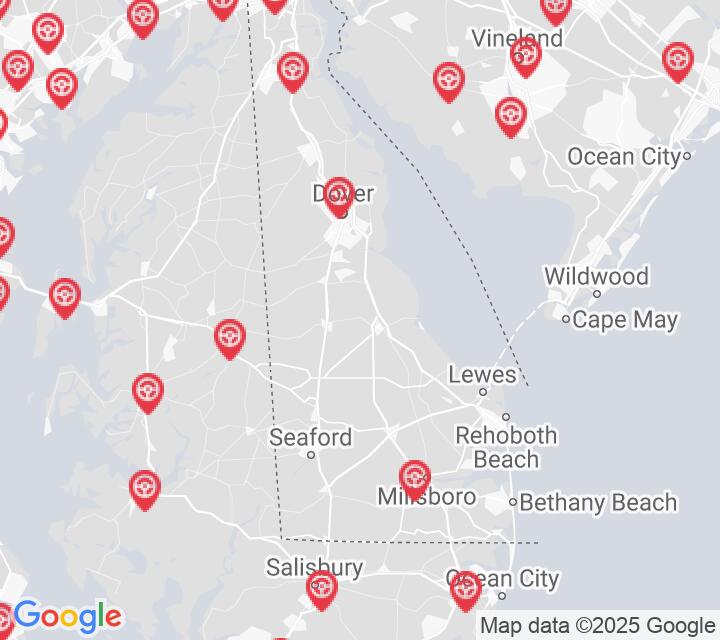
Search the best driving school in your neighbourhood

Frequently Asked Questions
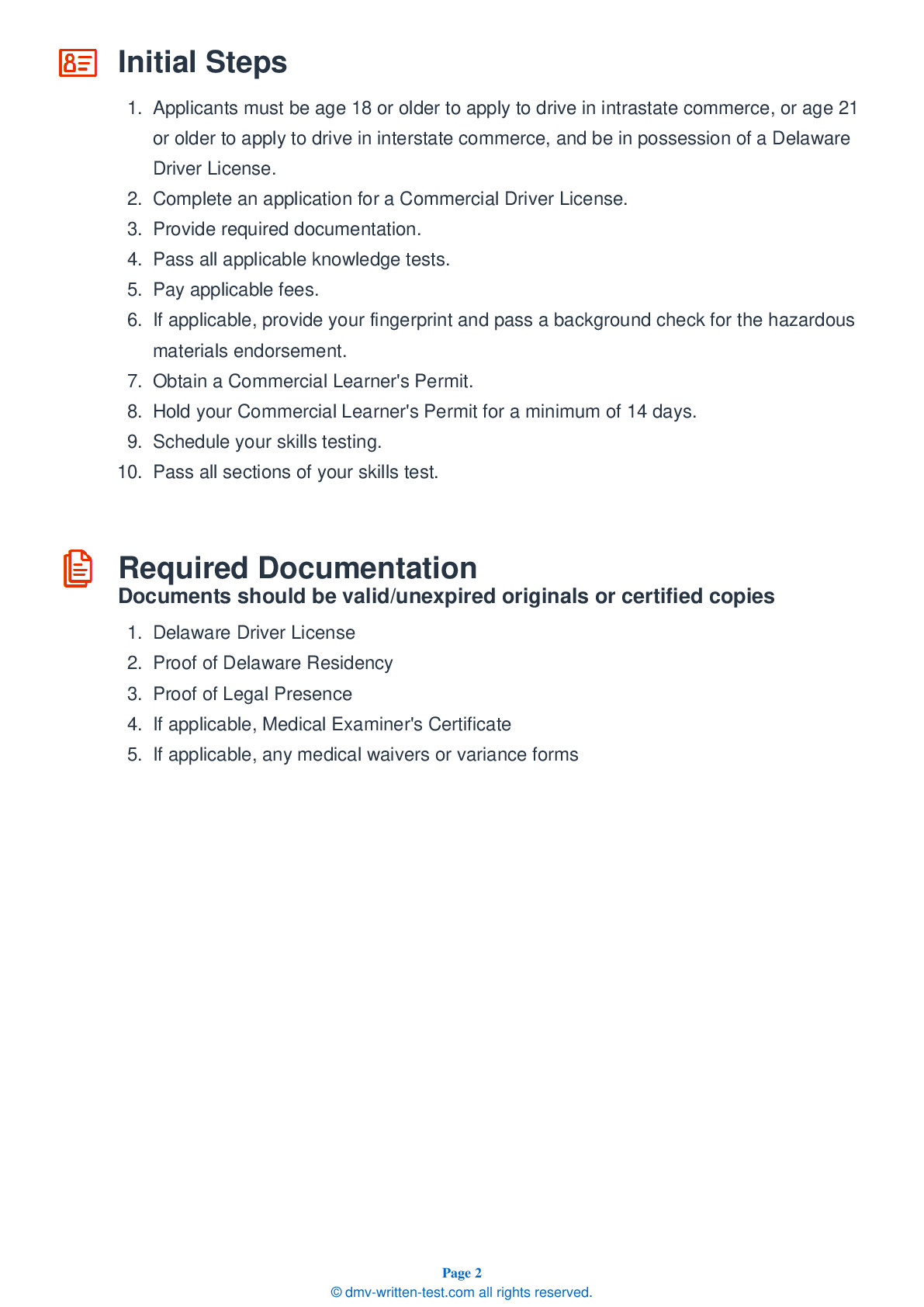
To obtain a CDL Tank endorsement in Delaware, follow these steps:
1. Obtain a Delaware Commercial Driver's License (CDL): You must have a valid CDL before applying for any endorsements. To obtain a CDL, you must pass a series of written and skills tests.
2. Meet the eligibility requirements: To obtain a Tank endorsement, you must be at least 21 years old, have a valid CDL, and pass the Tank Vehicle Knowledge Test.
3. Study for the Tank Vehicle Knowledge Test: The Tank Vehicle Knowledge Test covers topics such as tank vehicle inspection, driving techniques, and hazardous materials transportation. You can study for the test by reading the Delaware CDL Manual and taking practice tests.
4. Schedule and take the Tank Vehicle Knowledge Test: You can schedule an appointment to take the test at a Delaware DMV office. You must pass the test with a score of at least 80%.
5. Pay the fee: You will need to pay a fee to add the Tank endorsement to your CDL.
6. Obtain your CDL with Tank endorsement: Once you have passed the Tank Vehicle Knowledge Test and paid the fee, your CDL with Tank endorsement will be issued by the Delaware DMV.
It is important to note that additional requirements may apply if you intend to transport hazardous materials.
1. Obtain a Delaware Commercial Driver's License (CDL): You must have a valid CDL before applying for any endorsements. To obtain a CDL, you must pass a series of written and skills tests.
2. Meet the eligibility requirements: To obtain a Tank endorsement, you must be at least 21 years old, have a valid CDL, and pass the Tank Vehicle Knowledge Test.
3. Study for the Tank Vehicle Knowledge Test: The Tank Vehicle Knowledge Test covers topics such as tank vehicle inspection, driving techniques, and hazardous materials transportation. You can study for the test by reading the Delaware CDL Manual and taking practice tests.
4. Schedule and take the Tank Vehicle Knowledge Test: You can schedule an appointment to take the test at a Delaware DMV office. You must pass the test with a score of at least 80%.
5. Pay the fee: You will need to pay a fee to add the Tank endorsement to your CDL.
6. Obtain your CDL with Tank endorsement: Once you have passed the Tank Vehicle Knowledge Test and paid the fee, your CDL with Tank endorsement will be issued by the Delaware DMV.
It is important to note that additional requirements may apply if you intend to transport hazardous materials.
To obtain a CDL Tank license, also known as a Tanker endorsement, in Delaware, you must meet the following requirements:
1. Have a valid Delaware Commercial Driver's License (CDL): You must already have a valid CDL before applying for any endorsements.
2. Be at least 21 years old: You must be at least 21 years old to operate a commercial motor vehicle (CMV) across state lines, which is required for Tanker endorsement.
3. Pass the Tank Vehicle Knowledge Test: You must pass the Tank Vehicle Knowledge Test to demonstrate knowledge of safe operation of tank vehicles. The test covers topics such as tank vehicle inspection, driving techniques, and hazardous materials transportation.
4. Pass a skills test: You must also pass a skills test to demonstrate your ability to safely operate a tank vehicle.
5. Meet medical requirements: You must meet medical requirements, including having a valid Medical Examiner's Certificate.
6. Meet other requirements: If you intend to transport hazardous materials, you must also meet additional requirements, including obtaining a Hazardous Materials endorsement and undergoing a security threat assessment.
It is important to note that there are additional requirements for obtaining a CDL Tank license beyond those listed above. It is recommended that you review the Delaware CDL Manual and consult with the Delaware DMV for more information on obtaining a Tanker endorsement.
1. Have a valid Delaware Commercial Driver's License (CDL): You must already have a valid CDL before applying for any endorsements.
2. Be at least 21 years old: You must be at least 21 years old to operate a commercial motor vehicle (CMV) across state lines, which is required for Tanker endorsement.
3. Pass the Tank Vehicle Knowledge Test: You must pass the Tank Vehicle Knowledge Test to demonstrate knowledge of safe operation of tank vehicles. The test covers topics such as tank vehicle inspection, driving techniques, and hazardous materials transportation.
4. Pass a skills test: You must also pass a skills test to demonstrate your ability to safely operate a tank vehicle.
5. Meet medical requirements: You must meet medical requirements, including having a valid Medical Examiner's Certificate.
6. Meet other requirements: If you intend to transport hazardous materials, you must also meet additional requirements, including obtaining a Hazardous Materials endorsement and undergoing a security threat assessment.
It is important to note that there are additional requirements for obtaining a CDL Tank license beyond those listed above. It is recommended that you review the Delaware CDL Manual and consult with the Delaware DMV for more information on obtaining a Tanker endorsement.
Delaware DMV does not require any specific training or experience to obtain a CDL Tank endorsement, but it is highly recommended that you receive proper training before operating a tank vehicle. Tank vehicles have unique handling characteristics due to their size, shape, and cargo, which can make them more difficult to operate than other commercial vehicles.
You may want to consider completing a training course specifically designed for tank vehicle operation. This type of training can provide you with the knowledge and skills necessary to safely operate a tank vehicle and prepare you for the Tank Vehicle Knowledge Test and skills test required for the endorsement.
Additionally, some employers may require tank vehicle operation training or experience before hiring drivers for tank vehicle positions. It is important to research any potential employers and their specific requirements before pursuing a career in tank vehicle operation.
Overall, while Delaware DMV does not require specific training or experience for obtaining a CDL Tank endorsement, it is highly recommended that you obtain proper training and experience before operating a tank vehicle for your own safety and the safety of others on the road.
You may want to consider completing a training course specifically designed for tank vehicle operation. This type of training can provide you with the knowledge and skills necessary to safely operate a tank vehicle and prepare you for the Tank Vehicle Knowledge Test and skills test required for the endorsement.
Additionally, some employers may require tank vehicle operation training or experience before hiring drivers for tank vehicle positions. It is important to research any potential employers and their specific requirements before pursuing a career in tank vehicle operation.
Overall, while Delaware DMV does not require specific training or experience for obtaining a CDL Tank endorsement, it is highly recommended that you obtain proper training and experience before operating a tank vehicle for your own safety and the safety of others on the road.
Yes, there is an additional written test that you must pass to obtain a CDL Tank endorsement. This test is called the Tank Vehicle Knowledge Test and it covers topics specific to the safe operation of tank vehicles.
The test includes questions on topics such as identifying different types of tank vehicles, inspecting tanks for safety hazards, understanding weight distribution and handling characteristics of tank vehicles, and safely loading and unloading cargo.
In addition, if you plan to transport hazardous materials in your tank vehicle, you will also need to pass a Hazardous Materials endorsement exam in addition to the Tank Vehicle Knowledge Test. This exam covers topics such as recognizing and identifying hazardous materials, understanding proper loading and unloading procedures for hazardous materials, and complying with federal regulations related to transporting hazardous materials.
Before taking any written tests, it is recommended that you study the Delaware CDL Manual and any additional study materials provided by your training program or employer. This will help ensure that you are well-prepared for the tests and have a good understanding of safe tank vehicle operation and hazardous materials transportation practices.
The test includes questions on topics such as identifying different types of tank vehicles, inspecting tanks for safety hazards, understanding weight distribution and handling characteristics of tank vehicles, and safely loading and unloading cargo.
In addition, if you plan to transport hazardous materials in your tank vehicle, you will also need to pass a Hazardous Materials endorsement exam in addition to the Tank Vehicle Knowledge Test. This exam covers topics such as recognizing and identifying hazardous materials, understanding proper loading and unloading procedures for hazardous materials, and complying with federal regulations related to transporting hazardous materials.
Before taking any written tests, it is recommended that you study the Delaware CDL Manual and any additional study materials provided by your training program or employer. This will help ensure that you are well-prepared for the tests and have a good understanding of safe tank vehicle operation and hazardous materials transportation practices.
The Tank endorsement written test covers topics specific to the safe operation of tank vehicles. Some of the topics covered in the test include:
1. Tank vehicle inspection: This includes identifying potential safety hazards, checking valves and fittings, and inspecting the tank for damage or leaks.
2. Tank vehicle loading and unloading procedures: This includes understanding proper procedures for loading and unloading hazardous materials, preventing spills or leaks, and properly securing cargo.
3. Tank vehicle driving: This includes understanding weight distribution and handling characteristics of tank vehicles, adjusting driving techniques to account for the high center of gravity of the tank, and recognizing potential hazards on the road.
4. Hazardous materials transportation: If you plan to transport hazardous materials in your tank vehicle, you will also need to pass a Hazardous Materials endorsement exam in addition to the Tank Vehicle Knowledge Test. This exam covers topics such as recognizing and identifying hazardous materials, understanding proper loading and unloading procedures for hazardous materials, and complying with federal regulations related to transporting hazardous materials.
It is important to thoroughly study all of these topics before taking the Tank Vehicle Knowledge Test. Make sure you have a good understanding of safe tank vehicle operation practices and hazardous materials transportation regulations before attempting the test.
1. Tank vehicle inspection: This includes identifying potential safety hazards, checking valves and fittings, and inspecting the tank for damage or leaks.
2. Tank vehicle loading and unloading procedures: This includes understanding proper procedures for loading and unloading hazardous materials, preventing spills or leaks, and properly securing cargo.
3. Tank vehicle driving: This includes understanding weight distribution and handling characteristics of tank vehicles, adjusting driving techniques to account for the high center of gravity of the tank, and recognizing potential hazards on the road.
4. Hazardous materials transportation: If you plan to transport hazardous materials in your tank vehicle, you will also need to pass a Hazardous Materials endorsement exam in addition to the Tank Vehicle Knowledge Test. This exam covers topics such as recognizing and identifying hazardous materials, understanding proper loading and unloading procedures for hazardous materials, and complying with federal regulations related to transporting hazardous materials.
It is important to thoroughly study all of these topics before taking the Tank Vehicle Knowledge Test. Make sure you have a good understanding of safe tank vehicle operation practices and hazardous materials transportation regulations before attempting the test.
In Delaware, there is no specific skills or maneuvers demonstration required to obtain a CDL Tank endorsement. The Tank Vehicle Knowledge Test is a written exam that tests your knowledge of safe tank vehicle operation and hazardous materials transportation practices.
However, it is important to note that if you plan to operate a tank vehicle, you will need to have the necessary skills to safely operate the vehicle on the road. This includes understanding the handling characteristics of tank vehicles, adjusting your driving techniques to account for the high center of gravity of the tank, and recognizing potential hazards on the road.
Before operating a tank vehicle, it is recommended that you receive proper training from a qualified instructor or employer. This may include hands-on training and practice in safely operating a tank vehicle, as well as classroom instruction on safe tank vehicle operation practices and hazardous materials transportation regulations.
Once you have passed the Tank Vehicle Knowledge Test and any other necessary endorsement exams, you will be issued a CDL with the appropriate endorsements, allowing you to legally operate a tank vehicle or transport hazardous materials in Delaware.
However, it is important to note that if you plan to operate a tank vehicle, you will need to have the necessary skills to safely operate the vehicle on the road. This includes understanding the handling characteristics of tank vehicles, adjusting your driving techniques to account for the high center of gravity of the tank, and recognizing potential hazards on the road.
Before operating a tank vehicle, it is recommended that you receive proper training from a qualified instructor or employer. This may include hands-on training and practice in safely operating a tank vehicle, as well as classroom instruction on safe tank vehicle operation practices and hazardous materials transportation regulations.
Once you have passed the Tank Vehicle Knowledge Test and any other necessary endorsement exams, you will be issued a CDL with the appropriate endorsements, allowing you to legally operate a tank vehicle or transport hazardous materials in Delaware.
Yes, there are restrictions and limitations for drivers with a CDL Tank endorsement. Here are some important ones to keep in mind:
1. Tank vehicle endorsement: In order to operate a tank vehicle, you must have a Tank Vehicle endorsement on your CDL. This requires passing the Tank Vehicle Knowledge Test.
2. Tank vehicle inspection: Before operating a tank vehicle, you must perform a pre-trip inspection to ensure the vehicle is safe and in good working condition. This includes inspecting valves and fittings, checking for leaks or damage to the tank, and ensuring that the cargo is properly secured.
3. Hazardous materials transportation: If you plan to transport hazardous materials in your tank vehicle, you will need to obtain a Hazardous Materials endorsement in addition to your Tank Vehicle endorsement. This requires passing a separate Hazardous Materials Knowledge Test.
4. Endorsement renewal: Tank Vehicle and Hazardous Materials endorsements must be renewed every five years.
5. Weight restrictions: There are weight restrictions for tank vehicles based on the type of cargo being transported and the capacity of the tank.
6. Special driving techniques: Tank vehicles have a high center of gravity which can make them more difficult to handle than other types of commercial vehicles. Drivers must be trained in special driving techniques for safely operating tank vehicles.
7. Special permit requirements: Some states may require special permits for transporting certain types of hazardous materials or operating oversized tank vehicles.
It is important to understand all of the restrictions and limitations associated with operating a tank vehicle before obtaining a CDL Tank endorsement. Make sure you receive proper training and follow all regulations to ensure safe operation of your vehicle.
1. Tank vehicle endorsement: In order to operate a tank vehicle, you must have a Tank Vehicle endorsement on your CDL. This requires passing the Tank Vehicle Knowledge Test.
2. Tank vehicle inspection: Before operating a tank vehicle, you must perform a pre-trip inspection to ensure the vehicle is safe and in good working condition. This includes inspecting valves and fittings, checking for leaks or damage to the tank, and ensuring that the cargo is properly secured.
3. Hazardous materials transportation: If you plan to transport hazardous materials in your tank vehicle, you will need to obtain a Hazardous Materials endorsement in addition to your Tank Vehicle endorsement. This requires passing a separate Hazardous Materials Knowledge Test.
4. Endorsement renewal: Tank Vehicle and Hazardous Materials endorsements must be renewed every five years.
5. Weight restrictions: There are weight restrictions for tank vehicles based on the type of cargo being transported and the capacity of the tank.
6. Special driving techniques: Tank vehicles have a high center of gravity which can make them more difficult to handle than other types of commercial vehicles. Drivers must be trained in special driving techniques for safely operating tank vehicles.
7. Special permit requirements: Some states may require special permits for transporting certain types of hazardous materials or operating oversized tank vehicles.
It is important to understand all of the restrictions and limitations associated with operating a tank vehicle before obtaining a CDL Tank endorsement. Make sure you receive proper training and follow all regulations to ensure safe operation of your vehicle.
In Delaware, if you are transporting liquid or gas materials in a tank vehicle with a capacity of 1,000 gallons or more, you must have a CDL with a Tank Vehicle endorsement. This applies to both interstate and intrastate transportation.
If the tank vehicle has a capacity of less than 1,000 gallons and is not used for hazardous materials transportation, you may not need a Tank Vehicle endorsement. However, it is important to check with the Delaware Department of Transportation or a qualified CDL instructor to determine the specific requirements for your situation.
It is worth noting that transporting hazardous materials without the required endorsement is illegal and can result in fines, penalties, and even criminal charges. It is important to obtain the necessary endorsements and follow all regulations to ensure safe and legal operation of your vehicle.
If the tank vehicle has a capacity of less than 1,000 gallons and is not used for hazardous materials transportation, you may not need a Tank Vehicle endorsement. However, it is important to check with the Delaware Department of Transportation or a qualified CDL instructor to determine the specific requirements for your situation.
It is worth noting that transporting hazardous materials without the required endorsement is illegal and can result in fines, penalties, and even criminal charges. It is important to obtain the necessary endorsements and follow all regulations to ensure safe and legal operation of your vehicle.
You can add the CDL Tank endorsement to your existing CDL license in Delaware. To do so, you will need to pass the Tank Vehicle Knowledge Test and pay the appropriate fee. You can take the test at any Delaware DMV location that offers CDL testing. Once you have passed the test, the endorsement will be added to your existing CDL license.
It is important to note that if you also plan to transport hazardous materials in your tank vehicle, you will need to obtain a Hazardous Materials endorsement in addition to your Tank Vehicle endorsement. This requires passing a separate Hazardous Materials Knowledge Test and paying an additional fee.
Adding endorsements to your CDL license is generally a faster and more cost-effective option than applying for a new license. However, if your existing CDL license has expired or has been revoked, you may need to apply for a new license and complete all of the necessary testing and requirements.
It is important to note that if you also plan to transport hazardous materials in your tank vehicle, you will need to obtain a Hazardous Materials endorsement in addition to your Tank Vehicle endorsement. This requires passing a separate Hazardous Materials Knowledge Test and paying an additional fee.
Adding endorsements to your CDL license is generally a faster and more cost-effective option than applying for a new license. However, if your existing CDL license has expired or has been revoked, you may need to apply for a new license and complete all of the necessary testing and requirements.
Yes, there are specific requirements and regulations for handling hazardous materials with a CDL Tank endorsement in Delaware. These regulations are in place to ensure the safe transportation of hazardous materials and protect public safety.
Some of the requirements for handling hazardous materials with a CDL Tank endorsement include:
1. Obtaining a Hazardous Materials endorsement in addition to your Tank Vehicle endorsement.
2. Completing specialized training and obtaining a Hazardous Materials Endorsement (HME) on your CDL.
3. Carrying a copy of your Hazmat endorsement and your Hazmat training certificate with you while you are transporting hazardous materials.
4. Complying with all federal, state, and local regulations regarding the transportation of hazardous materials.
5. Ensuring that your tank vehicle is properly labeled with the appropriate placards and markings for the hazardous materials you are transporting.
6. Following all safety procedures for loading, unloading, and handling hazardous materials.
7. Reporting any spills or accidents involving hazardous materials to the appropriate authorities immediately.
It is important to note that failure to comply with these regulations can result in severe consequences, including fines, license suspension or revocation, and even criminal charges. Therefore, it is essential to understand and follow all regulations when transporting hazardous materials with a CDL Tank endorsement in Delaware.
Some of the requirements for handling hazardous materials with a CDL Tank endorsement include:
1. Obtaining a Hazardous Materials endorsement in addition to your Tank Vehicle endorsement.
2. Completing specialized training and obtaining a Hazardous Materials Endorsement (HME) on your CDL.
3. Carrying a copy of your Hazmat endorsement and your Hazmat training certificate with you while you are transporting hazardous materials.
4. Complying with all federal, state, and local regulations regarding the transportation of hazardous materials.
5. Ensuring that your tank vehicle is properly labeled with the appropriate placards and markings for the hazardous materials you are transporting.
6. Following all safety procedures for loading, unloading, and handling hazardous materials.
7. Reporting any spills or accidents involving hazardous materials to the appropriate authorities immediately.
It is important to note that failure to comply with these regulations can result in severe consequences, including fines, license suspension or revocation, and even criminal charges. Therefore, it is essential to understand and follow all regulations when transporting hazardous materials with a CDL Tank endorsement in Delaware.