2026 District Of Columbia Permit Test
The following questions are from real DMV written tests. These are some of the actual permit questions you will face in District Of Columbia. Each permit practice test question has three answer choices. Select one answer for each question and select "grade this section." You can find this button at the bottom of the drivers license quiz. For a complete list of questions and answers for District Of Columbia please visit https://cheat-sheets.dmv-written-test.com/en/district-of-columbia/car.
Number of Tests
Number of Question
Passing Score
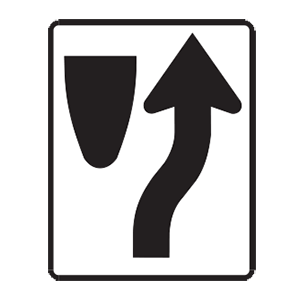
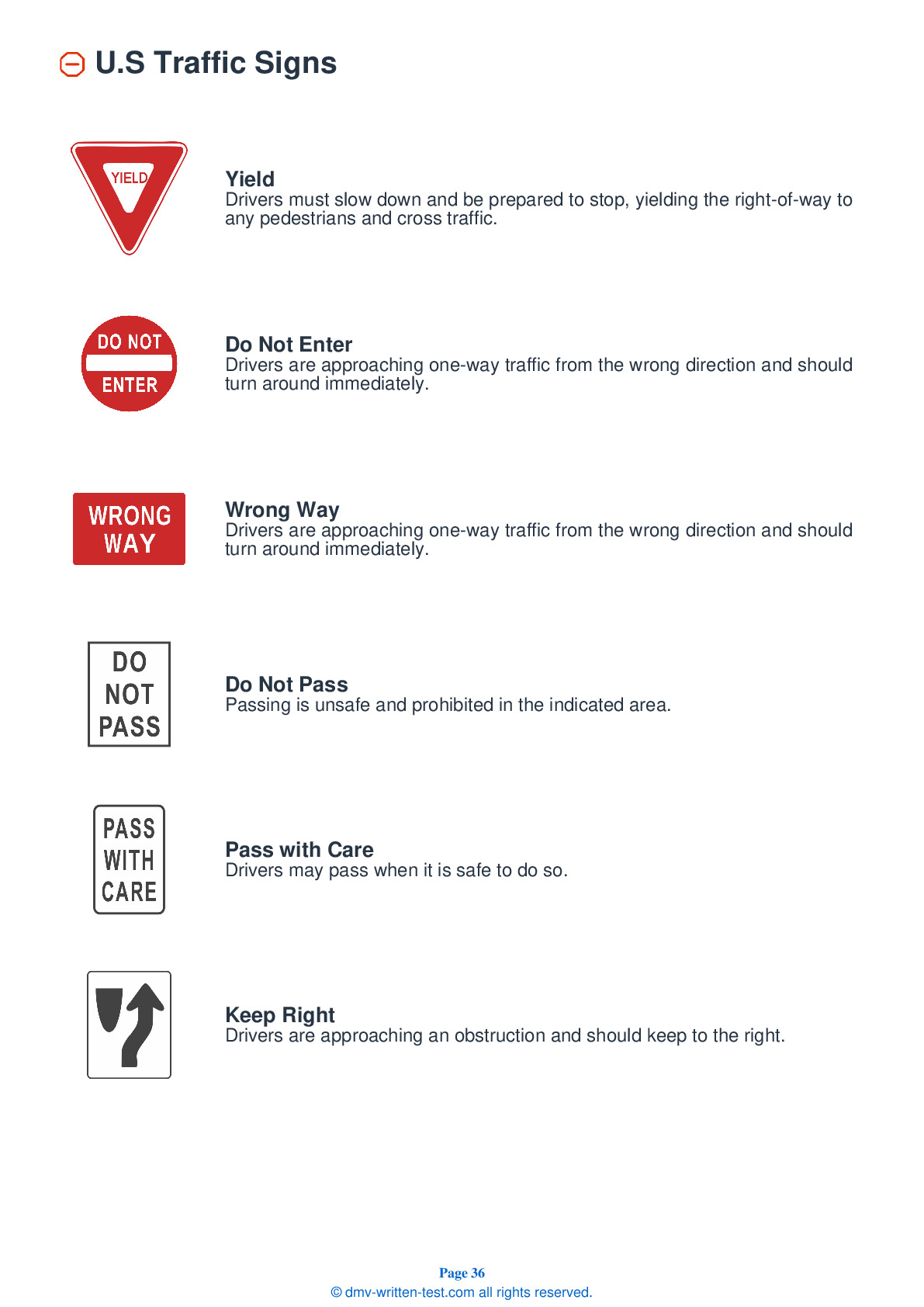
9. This sign means:
Explanation
Regulation signs regulate traffic speed and movement, displaying rules which drivers must obey. This regulation sign indicates that drivers should keep right to avoid an upcoming potential driving hazard.
10. Many crashes are caused by:
Explanation
Many crashes are caused by drivers who are driving too fast for conditions. Always drive within the legal speed limits and decrease your speed any time conditions are less than perfect.
11. Blind spots are:
Explanation
When changing lanes, look over your shoulder in the direction you plan to move. Check for obstructions near the rear corners of your vehicle. These areas are called “blind spots” because you cannot see them by using your mirrors.
12. When should drivers yield the right-of-way to pedestrians in a crosswalk?
Explanation
Bring your vehicle to a complete stop at a crosswalk to yield the right-of-way to any vehicle or pedestrian already in the intersection. You may carefully proceed if your lane is completely clear.
13. You are driving when it starts to sleet or snow. You should:
Explanation
In snowy weather, keep your windshield and mirrors clear. Increase your following distance when driving in wet and cold weather because a slippery road surface will increase the distance needed for your vehicle to stop.
14. If you drink alcohol socially, what helps ensure safe driving?
Explanation
One strategy to avoid driving while impaired or intoxicated is to arrange for a ride home with a friend who does not drink. Drinking coffee or taking a cold shower cannot reduce your blood alcohol content or reduce the effects of alcohol. On average, it takes about an hour for the body to eliminate the alcohol from a single drink.
15. Because driving involves some risk, it is wise to continually improve your driving and observation skills.
Explanation
Driving can become unsafe if drivers believe they have nothing to improve. For your safety and the safety of others, always strive to improve your driving and observation skills.
16. Always signal when:
Explanation
Your turn signals should always be used when you make any movement to the left or right. You should use your signal when pulling into traffic from a curbside parking space, moving into a new lane, or passing another vehicle.
Frequently Asked Questions
To obtain a driver's license in District of Columbia, you need to follow these requirements:
1. Age requirement: You must be at least 16 years old to apply for a driver's license.
2. Learner's permit: You must hold a learner's permit for at least six months before applying for a driver's license.
3. Driver education: If you are under 18 years old, you must complete a driver education course approved by the DC Department of Motor Vehicles (DMV).
4. Knowledge test: You must pass a knowledge test that covers traffic laws, signs, signals, and safe driving practices.
5. Vision test: You must pass a vision test to ensure that you meet the minimum vision requirements for driving.
6. Road skills test: You must pass a road skills test that evaluates your ability to operate a motor vehicle safely in various traffic situations.
7. Identification: You need to provide proof of your identity, residency, and legal presence in the United States.
8. Social Security Number: You need to provide your Social Security number or proof of ineligibility for one.
9. Payment: You need to pay the required fee for the driver's license application and any other applicable fees.
Once you have met all these requirements, you will receive your District of Columbia driver's license.
1. Age requirement: You must be at least 16 years old to apply for a driver's license.
2. Learner's permit: You must hold a learner's permit for at least six months before applying for a driver's license.
3. Driver education: If you are under 18 years old, you must complete a driver education course approved by the DC Department of Motor Vehicles (DMV).
4. Knowledge test: You must pass a knowledge test that covers traffic laws, signs, signals, and safe driving practices.
5. Vision test: You must pass a vision test to ensure that you meet the minimum vision requirements for driving.
6. Road skills test: You must pass a road skills test that evaluates your ability to operate a motor vehicle safely in various traffic situations.
7. Identification: You need to provide proof of your identity, residency, and legal presence in the United States.
8. Social Security Number: You need to provide your Social Security number or proof of ineligibility for one.
9. Payment: You need to pay the required fee for the driver's license application and any other applicable fees.
Once you have met all these requirements, you will receive your District of Columbia driver's license.
The cost of getting a driver's license in District of Columbia varies depending on the type of license you are applying for and any additional services you may require. Here are the current fees for driver's licenses in DC:
1. Learner's permit: $20
2. Provisional license: $47
3. Full driver's license: $47
4. Real ID driver's license: $47
5. Commercial driver's license (CDL): $73
6. Motorcycle endorsement: $13
In addition to these fees, there may be additional charges for services such as road skills tests, knowledge tests, and duplicate licenses. It is always best to check with the DC Department of Motor Vehicles for the most up-to-date fee information.
1. Learner's permit: $20
2. Provisional license: $47
3. Full driver's license: $47
4. Real ID driver's license: $47
5. Commercial driver's license (CDL): $73
6. Motorcycle endorsement: $13
In addition to these fees, there may be additional charges for services such as road skills tests, knowledge tests, and duplicate licenses. It is always best to check with the DC Department of Motor Vehicles for the most up-to-date fee information.
In District of Columbia, you must be at least 16 years old to apply for a driver's license. However, if you are under the age of 18, there are additional requirements that you must meet, such as completing a driver education course approved by the DC Department of Motor Vehicles (DMV) and holding a learner's permit for at least six months before applying for a driver's license. Once you have met all the requirements, you can apply for a full driver's license.
When applying for a driver's license in District of Columbia, you will need to bring the following documents:
1. Proof of identity: You must provide at least one primary source document, such as a certified birth certificate, valid US passport or Consular Report of Birth Abroad. If you are not a US citizen, you must provide a valid Permanent Resident Card or other immigration documents.
2. Proof of Social Security: You must provide your Social Security number (SSN) or a letter from the Social Security Administration (SSA) indicating that you are not eligible for an SSN.
3. Proof of residency: You must provide at least two documents that show your current DC address, such as utility bills, bank statements or rental agreements.
4. Proof of parental approval: If you are under 18 years old, you must have a parent or legal guardian sign your application for a driver's license.
5. Payment: You will need to pay the appropriate fee for the type of license you are applying for.
It is important to note that these are the general required documents and additional documents may be required depending on your circumstances. It is always best to check with the DC Department of Motor Vehicles for specific information regarding required documents.
1. Proof of identity: You must provide at least one primary source document, such as a certified birth certificate, valid US passport or Consular Report of Birth Abroad. If you are not a US citizen, you must provide a valid Permanent Resident Card or other immigration documents.
2. Proof of Social Security: You must provide your Social Security number (SSN) or a letter from the Social Security Administration (SSA) indicating that you are not eligible for an SSN.
3. Proof of residency: You must provide at least two documents that show your current DC address, such as utility bills, bank statements or rental agreements.
4. Proof of parental approval: If you are under 18 years old, you must have a parent or legal guardian sign your application for a driver's license.
5. Payment: You will need to pay the appropriate fee for the type of license you are applying for.
It is important to note that these are the general required documents and additional documents may be required depending on your circumstances. It is always best to check with the DC Department of Motor Vehicles for specific information regarding required documents.
To schedule a driving test in District of Columbia, you can visit the DC Department of Motor Vehicles (DMV) website or call the DMV at (202) 737-4404. Here are the steps to schedule a driving test:
1. Go to the DC DMV website and click on the "Schedule a Road Test" link.
2. Enter your personal information, including your driver's license number, date of birth and last four digits of your Social Security number.
3. Choose the type of test you want to take, either a regular driver's license test or a commercial driver's license test.
4. Select the date and time that works best for you from the available options.
5. Pay the testing fee online using a credit or debit card.
6. Print out the confirmation page as proof of your scheduled driving test date and time.
It is important to arrive at least 15 minutes prior to your scheduled driving test appointment with all required documents, including your learner's permit, vehicle registration and proof of insurance.
1. Go to the DC DMV website and click on the "Schedule a Road Test" link.
2. Enter your personal information, including your driver's license number, date of birth and last four digits of your Social Security number.
3. Choose the type of test you want to take, either a regular driver's license test or a commercial driver's license test.
4. Select the date and time that works best for you from the available options.
5. Pay the testing fee online using a credit or debit card.
6. Print out the confirmation page as proof of your scheduled driving test date and time.
It is important to arrive at least 15 minutes prior to your scheduled driving test appointment with all required documents, including your learner's permit, vehicle registration and proof of insurance.
The process for getting a learner's permit in District of Columbia involves the following steps:
1. Meet the age requirement: You must be at least 16 years old to apply for a learner's permit in DC.
2. Gather necessary documents: You will need to provide proof of identity, proof of residency, and proof of parental consent (if under 18). Please refer to the previous answer for specific documents required.
3. Pass a vision test: You will need to pass a vision test to show that you have adequate vision to drive safely.
4. Take the knowledge test: You will need to take and pass a knowledge test which includes traffic signs, traffic laws, and safe driving practices.
5. Pay the fees: There is a fee for obtaining a learner's permit in DC which can be paid by cash, check, money order, or credit/debit card.
6. Receive your learner's permit: Once you have passed the knowledge test and paid your fees, you will receive your learner's permit which allows you to practice driving with a licensed driver over the age of 21.
It is important to note that learners permit holders must complete a minimum of 40 hours of supervised driving practice with at least 10 hours being at night before they can take the road test for their driver’s license.
1. Meet the age requirement: You must be at least 16 years old to apply for a learner's permit in DC.
2. Gather necessary documents: You will need to provide proof of identity, proof of residency, and proof of parental consent (if under 18). Please refer to the previous answer for specific documents required.
3. Pass a vision test: You will need to pass a vision test to show that you have adequate vision to drive safely.
4. Take the knowledge test: You will need to take and pass a knowledge test which includes traffic signs, traffic laws, and safe driving practices.
5. Pay the fees: There is a fee for obtaining a learner's permit in DC which can be paid by cash, check, money order, or credit/debit card.
6. Receive your learner's permit: Once you have passed the knowledge test and paid your fees, you will receive your learner's permit which allows you to practice driving with a licensed driver over the age of 21.
It is important to note that learners permit holders must complete a minimum of 40 hours of supervised driving practice with at least 10 hours being at night before they can take the road test for their driver’s license.
In District of Columbia, learner's permit holders are required to complete a minimum of 40 hours of supervised driving practice, with at least 10 hours being at night, before they can take the road test for their driver’s license. The supervising driver must be at least 21 years old and have a valid driver's license. Learner's permit holders are also required to hold the permit for a minimum of six months before they can take the road test for their driver’s license. During this time, it is recommended that they practice driving in a variety of conditions and situations to gain experience and confidence behind the wheel.
Preparing for the driving test in District of Columbia involves the following steps:
1. Practice driving: The more you practice driving, the more comfortable and confident you will be behind the wheel. Make sure to practice in a variety of conditions and situations, such as on highways, in residential areas, and in different weather conditions.
2. Study the driver’s manual: The driver’s manual contains important information about traffic laws and safe driving practices. Reviewing it will help you prepare for the road test.
3. Take a practice test: You can take a practice driving test online or through your driver’s education course to get a feel for what to expect on the actual road test.
4. Learn from your mistakes: If you make mistakes during your practice driving sessions, use them as an opportunity to learn and improve your driving skills.
5. Get familiar with the vehicle: Before taking the road test, make sure you are familiar with the vehicle you will be using for the test. Practice using all of the controls, such as turn signals and windshield wipers.
6. Be prepared on test day: On the day of your road test, make sure you arrive on time and bring all necessary documents, such as your learner's permit and proof of insurance.
Remember, passing the road test requires not only technical skills but also good judgement and decision-making abilities while driving. Therefore it is important to stay calm and focused while taking the exam.
1. Practice driving: The more you practice driving, the more comfortable and confident you will be behind the wheel. Make sure to practice in a variety of conditions and situations, such as on highways, in residential areas, and in different weather conditions.
2. Study the driver’s manual: The driver’s manual contains important information about traffic laws and safe driving practices. Reviewing it will help you prepare for the road test.
3. Take a practice test: You can take a practice driving test online or through your driver’s education course to get a feel for what to expect on the actual road test.
4. Learn from your mistakes: If you make mistakes during your practice driving sessions, use them as an opportunity to learn and improve your driving skills.
5. Get familiar with the vehicle: Before taking the road test, make sure you are familiar with the vehicle you will be using for the test. Practice using all of the controls, such as turn signals and windshield wipers.
6. Be prepared on test day: On the day of your road test, make sure you arrive on time and bring all necessary documents, such as your learner's permit and proof of insurance.
Remember, passing the road test requires not only technical skills but also good judgement and decision-making abilities while driving. Therefore it is important to stay calm and focused while taking the exam.
During the driving test, it is important to avoid common mistakes that can result in points being deducted or even failing the exam. Some common mistakes to avoid during the driving test in District of Columbia include:
1. Failing to stop at stop signs or red lights: Make sure to come to a complete stop at stop signs and red lights.
2. Failing to use turn signals: Always use your turn signals when making turns, changing lanes, and merging.
3. Speeding: Make sure to obey posted speed limits and drive at a safe speed for the conditions.
4. Not checking blind spots: Always check your blind spots before changing lanes or merging.
5. Not using mirrors: Use your mirrors frequently to stay aware of your surroundings.
6. Improper lane changes: Make sure to check your blind spots and use turn signals when changing lanes.
7. Rolling stops: Make sure to come to a complete stop at stop signs and not just rolling through them.
8. Not yielding the right of way: Always yield the right of way to pedestrians, bicyclists, and other vehicles as appropriate.
9. Improper parking: Make sure to park within the lines of a parking space and follow all parking regulations.
Remember, it is important to stay calm and focused during the driving test, and always follow safe driving practices.
1. Failing to stop at stop signs or red lights: Make sure to come to a complete stop at stop signs and red lights.
2. Failing to use turn signals: Always use your turn signals when making turns, changing lanes, and merging.
3. Speeding: Make sure to obey posted speed limits and drive at a safe speed for the conditions.
4. Not checking blind spots: Always check your blind spots before changing lanes or merging.
5. Not using mirrors: Use your mirrors frequently to stay aware of your surroundings.
6. Improper lane changes: Make sure to check your blind spots and use turn signals when changing lanes.
7. Rolling stops: Make sure to come to a complete stop at stop signs and not just rolling through them.
8. Not yielding the right of way: Always yield the right of way to pedestrians, bicyclists, and other vehicles as appropriate.
9. Improper parking: Make sure to park within the lines of a parking space and follow all parking regulations.
Remember, it is important to stay calm and focused during the driving test, and always follow safe driving practices.
Yes, you can use your own car for the driving test in District of Columbia, as long as the car meets certain requirements. The car must:
1. Have valid registration and proof of insurance.
2. Be in safe working condition, including all lights, signals, brakes, and tires.
3. Have an unobstructed windshield and windows.
4. Have functioning seat belts for both the driver and any passengers.
5. Be clean and free of debris.
6. Not have any warning lights on the dashboard indicating a malfunction of the vehicle.
It is important to note that if you use your own car for the driving test, it must meet these requirements and be in good condition to pass inspection before the test begins. If your vehicle does not meet these requirements or has any safety issues, you will not be able to take the driving test in your own car. In that case, you will need to rent or borrow a car that meets the requirements or use one provided by a driving school or testing center.
1. Have valid registration and proof of insurance.
2. Be in safe working condition, including all lights, signals, brakes, and tires.
3. Have an unobstructed windshield and windows.
4. Have functioning seat belts for both the driver and any passengers.
5. Be clean and free of debris.
6. Not have any warning lights on the dashboard indicating a malfunction of the vehicle.
It is important to note that if you use your own car for the driving test, it must meet these requirements and be in good condition to pass inspection before the test begins. If your vehicle does not meet these requirements or has any safety issues, you will not be able to take the driving test in your own car. In that case, you will need to rent or borrow a car that meets the requirements or use one provided by a driving school or testing center.
If you fail the driving test in District of Columbia, you will need to wait at least one week before you can take the test again. You will be given a score sheet that shows the areas in which you were marked down. You can use this information to practice and improve your skills for the next test.
It is important to note that there is a fee for each driving test attempt, so failing the test can become costly. In addition, if you fail multiple times, you may be required to take additional driver education or training courses before being allowed to take the test again.
To increase your chances of passing the driving test, it is recommended that you practice driving with a licensed driver and review the rules of the road and safe driving practices. You may also consider taking a driver education course or hiring a professional driving instructor to help you prepare for the test.
It is important to note that there is a fee for each driving test attempt, so failing the test can become costly. In addition, if you fail multiple times, you may be required to take additional driver education or training courses before being allowed to take the test again.
To increase your chances of passing the driving test, it is recommended that you practice driving with a licensed driver and review the rules of the road and safe driving practices. You may also consider taking a driver education course or hiring a professional driving instructor to help you prepare for the test.
Yes, there are several restrictions for new drivers in District of Columbia:
1. Learner's Permit: If you are a new driver under the age of 21, you must hold a learner's permit for at least 6 months before you can apply for a provisional license. During this time, you must complete at least 40 hours of supervised driving practice, with at least 10 hours of practice taking place at night.
2. Provisional License: If you are under the age of 21 and have held a learner's permit for at least 6 months, you can apply for a provisional license. This license comes with several restrictions, including:
- You cannot drive between the hours of midnight and 6:00 am unless accompanied by a licensed driver who is at least 21 years old and has held their license for at least 3 years.
- You cannot use any electronic devices while driving, including cell phones, unless it is an emergency.
- You cannot have more than one passenger in the car who is under the age of 21 and not an immediate family member.
3. Full License: Once you have held a provisional license for at least 6 months and have not committed any major traffic violations or accidents, you can apply for a full driver's license without restrictions.
It is important to note that these restrictions may vary based on your age and driving history, so it is important to check with the District of Columbia Department of Motor Vehicles (DMV) for specific information related to your situation.
1. Learner's Permit: If you are a new driver under the age of 21, you must hold a learner's permit for at least 6 months before you can apply for a provisional license. During this time, you must complete at least 40 hours of supervised driving practice, with at least 10 hours of practice taking place at night.
2. Provisional License: If you are under the age of 21 and have held a learner's permit for at least 6 months, you can apply for a provisional license. This license comes with several restrictions, including:
- You cannot drive between the hours of midnight and 6:00 am unless accompanied by a licensed driver who is at least 21 years old and has held their license for at least 3 years.
- You cannot use any electronic devices while driving, including cell phones, unless it is an emergency.
- You cannot have more than one passenger in the car who is under the age of 21 and not an immediate family member.
3. Full License: Once you have held a provisional license for at least 6 months and have not committed any major traffic violations or accidents, you can apply for a full driver's license without restrictions.
It is important to note that these restrictions may vary based on your age and driving history, so it is important to check with the District of Columbia Department of Motor Vehicles (DMV) for specific information related to your situation.
No, you cannot apply for a driver's license online in District of Columbia. However, you can start the application process online by filling out the driver's license application form on the District of Columbia Department of Motor Vehicles (DMV) website. After completing the form, you will need to visit a DMV service center in person to provide the necessary documents, take a vision test, and pass the written and driving tests (if applicable).
It is important to note that some DMV services are available online, such as renewing your license or identification card, replacing a lost or stolen license or identification card, and scheduling an appointment for certain services. But applying for a new driver's license requires an in-person visit to the DMV.
It is important to note that some DMV services are available online, such as renewing your license or identification card, replacing a lost or stolen license or identification card, and scheduling an appointment for certain services. But applying for a new driver's license requires an in-person visit to the DMV.
It depends on the laws of the state you plan to drive in. In general, most states require drivers to have a valid driver's license or learner's permit from their home state in order to legally operate a motor vehicle on their roads. Some states may also have additional requirements, such as a minimum age or additional supervision.
In the District of Columbia, if you have a learner's permit, you are only allowed to drive with a licensed driver who is at least 21 years old and has held their license for at least 3 years. This applies whether you are driving in the District of Columbia or in another state.
Therefore, it is important to check the laws and requirements of the state you plan to drive in before attempting to drive with a learner's permit. If you are unsure, you can contact the Department of Motor Vehicles (DMV) in that state for more information.
In the District of Columbia, if you have a learner's permit, you are only allowed to drive with a licensed driver who is at least 21 years old and has held their license for at least 3 years. This applies whether you are driving in the District of Columbia or in another state.
Therefore, it is important to check the laws and requirements of the state you plan to drive in before attempting to drive with a learner's permit. If you are unsure, you can contact the Department of Motor Vehicles (DMV) in that state for more information.
In the District of Columbia, a driver's license is generally valid for 8 years for drivers under the age of 70. For drivers over the age of 70, a driver's license is valid for 2 years. However, it is important to note that the expiration date on your driver's license may vary depending on your date of birth or other factors.
In addition, if you are a non-US citizen, your driver's license may be valid for a shorter period of time depending on the expiration date of your visa or other immigration documents.
It is important to renew your driver's license before it expires to avoid driving with an expired license, which can result in fines and other penalties. The District of Columbia DMV allows you to renew your license up to 60 days before it expires.
In addition, if you are a non-US citizen, your driver's license may be valid for a shorter period of time depending on the expiration date of your visa or other immigration documents.
It is important to renew your driver's license before it expires to avoid driving with an expired license, which can result in fines and other penalties. The District of Columbia DMV allows you to renew your license up to 60 days before it expires.
Yes, in the District of Columbia, you can renew your driver's license online as long as you meet certain requirements. To be eligible for online renewal, you must:
- Be a US citizen or permanent resident
- Be between the ages of 21 and 70
- Have a valid driver's license that is not suspended, revoked, or expired for more than 545 days
- Have no medical conditions that would affect your ability to drive safely
- Have no outstanding debts or fines with the District of Columbia
If you meet these requirements, you can renew your driver's license online through the District of Columbia DMV website. You will need to provide your current driver's license number, social security number, and other personal information to verify your identity.
If you are not eligible for online renewal, you will need to renew your driver's license in person at a DMV service center.
- Be a US citizen or permanent resident
- Be between the ages of 21 and 70
- Have a valid driver's license that is not suspended, revoked, or expired for more than 545 days
- Have no medical conditions that would affect your ability to drive safely
- Have no outstanding debts or fines with the District of Columbia
If you meet these requirements, you can renew your driver's license online through the District of Columbia DMV website. You will need to provide your current driver's license number, social security number, and other personal information to verify your identity.
If you are not eligible for online renewal, you will need to renew your driver's license in person at a DMV service center.
If you are an international student or foreign resident in the District of Columbia and wish to obtain a driver's license, you will need to follow these steps:
1. Apply for a learner's permit: First, you will need to apply for a learner's permit by visiting a DMV service center in person. You will need to provide proof of identity, proof of residency, and your visa and immigration documents. You will also need to pass a vision test and a knowledge test.
2. Practice driving: With your learner's permit, you can practice driving with a licensed driver in the passenger seat who is at least 21 years old.
3. Schedule and pass a road test: Once you feel comfortable driving, you can schedule and take the road test at a DMV service center.
4. Receive your driver's license: If you pass the road test, you will receive your driver's license.
It is important to note that the requirements for obtaining a driver's license as an international student or foreign resident may vary depending on your country of origin. You should check with the District of Columbia DMV for specific requirements and regulations.
1. Apply for a learner's permit: First, you will need to apply for a learner's permit by visiting a DMV service center in person. You will need to provide proof of identity, proof of residency, and your visa and immigration documents. You will also need to pass a vision test and a knowledge test.
2. Practice driving: With your learner's permit, you can practice driving with a licensed driver in the passenger seat who is at least 21 years old.
3. Schedule and pass a road test: Once you feel comfortable driving, you can schedule and take the road test at a DMV service center.
4. Receive your driver's license: If you pass the road test, you will receive your driver's license.
It is important to note that the requirements for obtaining a driver's license as an international student or foreign resident may vary depending on your country of origin. You should check with the District of Columbia DMV for specific requirements and regulations.
Yes, there is a difference between a driver's license and a learner's permit.
A driver's license is an official document that allows you to legally operate a motor vehicle on public roads. To obtain a driver's license, you must pass a written knowledge test, a driving skills test, and meet other requirements such as providing proof of identity and residency.
On the other hand, a learner's permit is a temporary license that allows you to practice driving under the supervision of a licensed driver. In most states, including the District of Columbia, you must have a learner's permit for a certain period of time before you can take the driving skills test and obtain your driver's license.
Learner's permits typically have restrictions such as only being allowed to drive during daylight hours or with a licensed adult in the passenger seat. In general, learner's permits are intended to help new or inexperienced drivers gain experience behind the wheel before they are granted full driving privileges with a driver's license.
A driver's license is an official document that allows you to legally operate a motor vehicle on public roads. To obtain a driver's license, you must pass a written knowledge test, a driving skills test, and meet other requirements such as providing proof of identity and residency.
On the other hand, a learner's permit is a temporary license that allows you to practice driving under the supervision of a licensed driver. In most states, including the District of Columbia, you must have a learner's permit for a certain period of time before you can take the driving skills test and obtain your driver's license.
Learner's permits typically have restrictions such as only being allowed to drive during daylight hours or with a licensed adult in the passenger seat. In general, learner's permits are intended to help new or inexperienced drivers gain experience behind the wheel before they are granted full driving privileges with a driver's license.
Yes, there are specific vision requirements for obtaining a driver's license in the District of Columbia.
When you apply for a driver's license or learner's permit, you will be required to pass a vision test. The minimum acceptable visual acuity is 20/40 in at least one eye, with or without corrective lenses. If you do not meet the minimum standard, you may be referred to an eye doctor for an examination and may be required to wear corrective lenses while driving.
In addition to the vision test, drivers in the District of Columbia are required to have a visual field of at least 140 degrees. This means that you must be able to see objects that are 140 degrees to the left and right while looking straight ahead.
It is important to note that these are the minimum requirements for vision when obtaining a driver's license. If you have any concerns about your vision or ability to drive safely, it is recommended that you consult an eye doctor or other medical professional.
When you apply for a driver's license or learner's permit, you will be required to pass a vision test. The minimum acceptable visual acuity is 20/40 in at least one eye, with or without corrective lenses. If you do not meet the minimum standard, you may be referred to an eye doctor for an examination and may be required to wear corrective lenses while driving.
In addition to the vision test, drivers in the District of Columbia are required to have a visual field of at least 140 degrees. This means that you must be able to see objects that are 140 degrees to the left and right while looking straight ahead.
It is important to note that these are the minimum requirements for vision when obtaining a driver's license. If you have any concerns about your vision or ability to drive safely, it is recommended that you consult an eye doctor or other medical professional.
No, you cannot use a rental car for your driving test in the District of Columbia.
When you take your driving test, you must provide a vehicle that is registered, insured, and in good working condition. The vehicle must also be equipped with a valid inspection sticker and have functioning safety features such as turn signals, headlights, and brake lights.
While it is possible to rent a car that meets these requirements, most rental car companies require that the person renting the car be at least 21 years old and have a valid driver's license. Additionally, some rental car companies may not allow their vehicles to be used for driving tests.
It is recommended that you use a car that you are familiar with and have practiced driving in for your driving test. This may be a personal vehicle or one borrowed from a friend or family member.
When you take your driving test, you must provide a vehicle that is registered, insured, and in good working condition. The vehicle must also be equipped with a valid inspection sticker and have functioning safety features such as turn signals, headlights, and brake lights.
While it is possible to rent a car that meets these requirements, most rental car companies require that the person renting the car be at least 21 years old and have a valid driver's license. Additionally, some rental car companies may not allow their vehicles to be used for driving tests.
It is recommended that you use a car that you are familiar with and have practiced driving in for your driving test. This may be a personal vehicle or one borrowed from a friend or family member.
If you fail the driving test in the District of Columbia, you will be required to wait at least three business days before you can retake the test. This waiting period is intended to give you time to practice and improve your driving skills before attempting the test again.
When you are ready to retake the test, you will need to schedule a new appointment at a DMV service center. You will be required to pay the testing fee again and provide a vehicle that meets the requirements for the test.
It is recommended that you use the waiting period to practice and improve your driving skills. You may also consider taking additional driving lessons or practicing with a licensed driver to help prepare for the test.
When you are ready to retake the test, you will need to schedule a new appointment at a DMV service center. You will be required to pay the testing fee again and provide a vehicle that meets the requirements for the test.
It is recommended that you use the waiting period to practice and improve your driving skills. You may also consider taking additional driving lessons or practicing with a licensed driver to help prepare for the test.
To take the DMV written test in the District of Columbia, you will need to bring the following documents:
1. Proof of identity: This can be a valid passport, birth certificate, or Permanent Resident Card (Green Card).
2. Proof of residency: This can be a utility bill, lease agreement, or any other document that shows your name and current address in the District of Columbia.
3. Social Security Number: You will need to provide your Social Security Number (SSN) or a letter from the Social Security Administration (SSA) stating that you are not eligible for an SSN.
4. Proof of enrollment in a driver education program (if applicable): If you are under 18 years old and have not completed a driver education program, you will need to provide proof of enrollment in an approved program.
5. Payment: You will need to pay the testing fee at the time of your appointment.
It is important to note that these requirements may vary depending on your age and residency status. It is recommended that you check the DMV website or contact their customer service center to confirm the specific requirements for your situation before your appointment.
1. Proof of identity: This can be a valid passport, birth certificate, or Permanent Resident Card (Green Card).
2. Proof of residency: This can be a utility bill, lease agreement, or any other document that shows your name and current address in the District of Columbia.
3. Social Security Number: You will need to provide your Social Security Number (SSN) or a letter from the Social Security Administration (SSA) stating that you are not eligible for an SSN.
4. Proof of enrollment in a driver education program (if applicable): If you are under 18 years old and have not completed a driver education program, you will need to provide proof of enrollment in an approved program.
5. Payment: You will need to pay the testing fee at the time of your appointment.
It is important to note that these requirements may vary depending on your age and residency status. It is recommended that you check the DMV website or contact their customer service center to confirm the specific requirements for your situation before your appointment.
Yes, you can take the DMV written test in a language other than English in the District of Columbia. The DMV offers the written test in several languages, including Spanish, French, Chinese, Korean, and Vietnamese.
To take the test in a language other than English, you will need to visit a DMV service center and request a language-specific version of the test. The DMV will provide you with an interpreter or a translated version of the test.
It is important to note that if you take the test in a language other than English, you will still need to demonstrate your ability to read and understand English by reading and interpreting traffic signs and signals during the driving test.
Additionally, it is recommended that you study for the test in both your native language and in English to ensure that you understand all of the terminology and concepts related to driving.
To take the test in a language other than English, you will need to visit a DMV service center and request a language-specific version of the test. The DMV will provide you with an interpreter or a translated version of the test.
It is important to note that if you take the test in a language other than English, you will still need to demonstrate your ability to read and understand English by reading and interpreting traffic signs and signals during the driving test.
Additionally, it is recommended that you study for the test in both your native language and in English to ensure that you understand all of the terminology and concepts related to driving.
If you fail the DMV written test in the District of Columbia, you will not receive your driver's license or learner's permit. However, you may retake the test after a certain amount of time has passed.
In DC, you are allowed to retake the test the next business day if you fail it. If you fail the test three times, you will be required to wait at least 7 days before retaking it again.
When taking the test again, you will need to pay any applicable fees again. It is recommended that you study and prepare thoroughly before retaking the test to ensure that you pass it on your next attempt.
If you have any questions or concerns about retaking the DMV written test in DC, you can contact the DMV customer service center for more information and guidance.
In DC, you are allowed to retake the test the next business day if you fail it. If you fail the test three times, you will be required to wait at least 7 days before retaking it again.
When taking the test again, you will need to pay any applicable fees again. It is recommended that you study and prepare thoroughly before retaking the test to ensure that you pass it on your next attempt.
If you have any questions or concerns about retaking the DMV written test in DC, you can contact the DMV customer service center for more information and guidance.
In the District of Columbia, you can retake the DMV written test as soon as the next business day, if you fail it. However, if you fail the test three times, you will be required to wait at least 7 days before taking it again.
It's important to note that you will need to pay any applicable fees each time you take the test. Therefore, it's recommended that you study and prepare thoroughly before retaking the test to ensure that you pass it on your next attempt.
If you have any questions or concerns about retaking the DMV written test in DC, you can contact the DMV customer service center for more information and guidance.
It's important to note that you will need to pay any applicable fees each time you take the test. Therefore, it's recommended that you study and prepare thoroughly before retaking the test to ensure that you pass it on your next attempt.
If you have any questions or concerns about retaking the DMV written test in DC, you can contact the DMV customer service center for more information and guidance.
